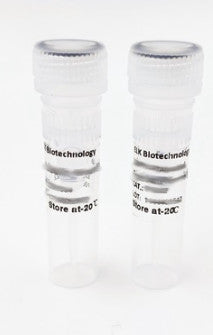
ELK Biotechnology
AR Rabbit Polyclonal Antibody - ES4268
AR Rabbit Polyclonal Antibody - ES4268
Couldn't load pickup availability
AR Rabbit Polyclonal Antibody
Sizes: 50μL, 100μL
Catalogue Numbers: ES4268-50, ES4268-100
Lead times: 1-2 weeks, if manufacturer has product in stock
Manufacturer/Ship Location: China
Background: The androgen receptor gene is more than 90 kb long and codes for a protein that has 3 major functional domains: the N-terminal domain, DNA-binding domain, and androgen-binding domain. The protein functions as a steroid-hormone activated transcription factor. Upon binding the hormone ligand, the receptor dissociates from accessory proteins, translocates into the nucleus, dimerizes, and then stimulates transcription of androgen responsive genes. This gene contains 2 polymorphic trinucleotide repeat segments that encode polyglutamine and polyglycine tracts in the N-terminal transactivation domain of its protein. Expansion of the polyglutamine tract from the normal 9-34 repeats to the pathogenic 38-62 repeats causes spinal bulbar muscular atrophy (Kennedy disease). Mutations in this gene are also associated with complete androgen insensitivity (CAIS). Two alternatively spliced variants encoding distinct isoform
Reactivity: Human, Mouse, Rat
Host: Rabbit
Applications: IF, WB, IHC, ELISA
Alternate Names: AR, DHTR, NR3C4, Androgen receptor, Dihydrotestosterone receptor, Nuclear receptor subfamily 3 group C member 4
Clonality: Polyclonal
Immunogen: Synthesized peptide derived from the Internal region of human AR.
Isotype: IgG
Target: Androgen Receptor
Specificity: AR Polyclonal Antibody detects endogenous levels of AR protein.
Dilution: IF: 1:50-200 WB 1:500-2000, ELISA 1:10000-20000 IHC 1:50-300
Purification: The antibody was affinity-purified from rabbit antiserum by affinity-chromatography using epitope-specific immunogen.
Concentration: 1 mg/ml,
Formlation: Liquid in PBS containing 50% glycerol, 0.5% BSA and 0.02% sodium azide.
Expression: [Isoform 2]: Mainly expressed in heart and skeletal muscle,, [Isoform 3]: Expressed in basal and stromal cells of the prostate (at protein level),
Observed Band (KD): 99kD
Fields: Oocyte meiosis, Pathways in cancer, Chemical carcinogenesis - receptor activation, Prostate cancer
Function: Disease: Defects in AR are the cause of androgen insensitivity syndrome (AIS) [MIM: 300068], previously known as testicular feminization syndrome (TFM). AIS is an X-linked recessive form of pseudohermaphroditism due end-organ resistance to androgen. Affected males have female external genitalia, female breast development, blind vagina, absent uterus and female adnexa, and abdominal or inguinal testes, despite a normal 46,XY karyotype
Disease: Defects in AR are the cause of androgen insensitivity syndrome partial (PAIS) [MIM: 312300], also known as Reifenstein syndrome. PAIS is characterized by hypospadias, hypogonadism, gynecomastia, genital ambiguity, normal XY karyotype, and a pedigree pattern consistent with X-linked recessive inheritance. Some patients present azoospermia or severe oligospermia without other clinical manifestations
Disease: Defects in AR are the cause of spinal and bulb
Subcellular Location: Nucleus Cytoplasm Detected at the promoter of target genes (PubMed:25091737) Predominantly cytoplasmic in unligated form but translocates to the nucleus upon ligand-binding Can also translocate to the nucleus in unligated form in the presence of RACK1
Storage and Stability: -20°C/1 year
Gene Name: AR
Protein Name: Androgen receptor
Mouse Gene ID: 11835
Mouse SwissProt Number: P19091
Rat Gene ID: 24208
Rat SwissProt Number: P15207
Research Use Only