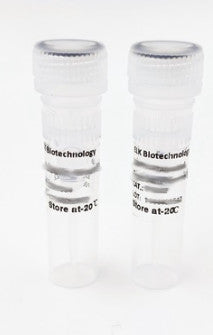
ELK Biotechnology
Catenin-β (phospho Ser552) Rabbit Polyclonal Antibody - ES1537
Catenin-β (phospho Ser552) Rabbit Polyclonal Antibody - ES1537
Couldn't load pickup availability
Catenin-β (phospho Ser552) Rabbit Polyclonal Antibody
Sizes: 50μL, 100μL
Catalogue Numbers: ES1537-50, ES1537-100
Lead times: 1-2 weeks, if manufacturer has product in stock
Manufacturer/Ship Location: China
Background: The protein encoded by this gene is part of a complex of proteins that constitute adherens junctions (AJs). AJs are necessary for the creation and maintenance of epithelial cell layers by regulating cell growth and adhesion between cells. The encoded protein also anchors the actin cytoskeleton and may be responsible for transmitting the contact inhibition signal that causes cells to stop dividing once the epithelial sheet is complete. Finally, this protein binds to the product of the APC gene, which is mutated in adenomatous polyposis of the colon. Mutations in this gene are a cause of colorectal cancer (CRC), pilomatrixoma (PTR), medulloblastoma (MDB), and ovarian cancer. Alternative splicing results in multiple transcript variants. [provided by RefSeq, Aug 2016],
Reactivity: Human, Mouse, Rat
Host: Rabbit
Applications: WB, ELISA
Alternate Names: CTNNB1, CTNNB, OK/SW-cl.35, Catenin beta-1, Beta-catenin
Clonality: Polyclonal
Immunogen: Synthesized phospho-peptide around the phosphorylation site of human Catenin-β (phospho Ser552)
Isotype: IgG
Target: Catenin-β
Specificity: Phospho-Catenin-β (S552) Polyclonal Antibody detects endogenous levels of Catenin-β protein only when phosphorylated at S552.
Dilution: Western Blot: 1/500 - 1/2000. ELISA: 1/40000. Not yet tested in other applications.
Purification: The antibody was affinity-purified from rabbit antiserum by affinity-chromatography using epitope-specific immunogen.
Concentration: 1 mg/ml,
Formlation: Liquid in PBS containing 50% glycerol, 0.5% BSA and 0.02% sodium azide.
Expression: Expressed in several hair follicle cell types: basal and peripheral matrix cells, and cells of the outer and inner root sheaths, Expressed in colon, Present in cortical neurons (at protein level), Expressed in breast cancer tissues (at protein level) (PubMed:29367600),
Molecular Weight (Da): 85kD
Observed Band (KD): 92kD
Fields: Rap1 signaling pathway, Wnt signaling pathway, Hippo signaling pathway, Focal adhesion, Adherens junction, Signaling pathways regulating pluripotency of stem cells, Leukocyte transendothelial migration, Melanogenesis, Thyroid hormone signaling pathway, Cushing syndrome, Alcoholic liver disease, Alzheimer disease, Pathways of neurodegeneration - multiple diseases, Bacterial invasion of epithelial cells, Salmonella infection, Hepatitis C, Human cytomegalovirus infection, Human papillomavirus infection, Kaposi sarcoma-associated herpesvirus infection, Pathways in cancer, Proteoglycans in cancer, Colorectal cancer, Endometrial cancer, Prostate cancer, Thyroid cancer, Basal cell carcinoma, Breast cancer, Hepatocellular carcinoma, Gastric cancer, Arrhythmogenic right ventricular cardiomyopathy, Fluid shear stress and atherosclerosis
Function: Disease: A chromosomal rearrangement involving CTNNB1 may be a cause of salivary gland pleiomorphic adenomas (PA) [181030]. Pleiomorphic adenomas are the most common benign epithelial tumors of the salivary gland. Translocation t(3, 8)(p21, q12) with PLAG1
Disease: Activating mutations in CTNNB1 have oncogenic activity resulting in tumor development. Somatic mutations are found in various tumor types, including colon cancers, ovarian and prostate carcinomas, hepatoblastoma (HB), hepatocellular carcinoma (HCC). HBs are malignant embryonal tumors mainly affecting young children in the first three years of life
Disease: Defects in CTNNB1 are a cause of medulloblastoma (MDB) [MIM: 155255]. MDB is a malignant, invasive embryonal tumor of the cerebellum with a preferential manifestation in children
Disease: Defects in CTNNB1 are a cause of pilomatrixoma (PTR) [MIM: 132600], a common benign skin tum
Subcellular Location: Cytoplasm Nucleus Cytoplasm, cytoskeleton Cell junction, adherens junction Cell junction Cell membrane Cytoplasm, cytoskeleton, microtubule organizing center, centrosome Cytoplasm, cytoskeleton, spindle pole Cell junction, synapse Cytoplasm, cytoskeleton, cilium basal body Colocalized with RAPGEF2 and TJP1 at cell-cell contacts (By similarity) Cytoplasmic when it is unstabilized (high level of phosphorylation) or bound to CDH1 Translocates to the nucleus when it is stabilized (low level of phosphorylation) Interaction with GLIS2 and MUC1 promotes nuclear translocation Interaction with EMD inhibits nuclear localization The majority of beta-catenin is localized to the cell membrane In interphase, colocalizes with CROCC between CEP250 puncta at the proximal end of cent
Storage and Stability: -20°C/1 year
Gene Name: CTNNB1 CTNNB OK/SW-cl.35 PRO2286
Protein Name: Catenin-β, b-catenin, Beta catenin, Beta-catenin, Cadherin associated protein, Catenin (cadherin associated protein), beta 1, 88 kDa, Catenin beta 1, Catenin beta-1, CATNB, CHBCAT, CTNB1_HUMAN, CTNNB, CTNNB1, DKFZ
Mouse Gene ID: 12387
Mouse SwissProt Number: Q02248
Rat Gene ID: 84353
Rat SwissProt Number: Q9WU82
Research Use Only