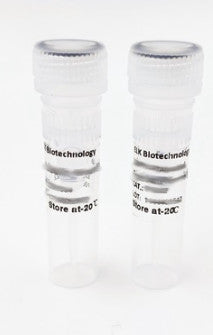
ELK Biotechnology
CD155 Rabbit Polyclonal Antibody - ES4358
CD155 Rabbit Polyclonal Antibody - ES4358
Couldn't load pickup availability
CD155 Rabbit Polyclonal Antibody
Sizes: 50μL, 100μL
Catalogue Numbers: ES4358-50, ES4358-100
Lead times: 1-2 weeks, if manufacturer has product in stock
Manufacturer/Ship Location: China
Background: The protein encoded by this gene is a transmembrane glycoprotein belonging to the immunoglobulin superfamily. The external domain mediates cell attachment to the extracellular matrix molecule vitronectin, while its intracellular domain interacts with the dynein light chain Tctex-1/DYNLT1. The gene is specific to the primate lineage, and serves as a cellular receptor for poliovirus in the first step of poliovirus replication. Multiple transcript variants encoding different isoforms have been found for this gene. [provided by RefSeq, Oct 2008],
Reactivity: Human, Mouse, Rat
Host: Rabbit
Applications: WB IF, ELISA
Alternate Names: PVR, PVS, Poliovirus receptor, Nectin-like protein 5, NECL-5, CD155
Clonality: Polyclonal
Immunogen: The antiserum was produced against synthesized peptide derived from the Internal region of human PVR. AA range:81-130
Isotype: IgG
Target: CD155
Specificity: CD155 Polyclonal Antibody detects endogenous levels of CD155 protein.
Dilution: WB 1:500-2000 IF 1:100-300 ELISA 1:5000-20000 Not yet tested in other applications.
Purification: The antibody was affinity-purified from rabbit antiserum by affinity-chromatography using epitope-specific immunogen.
Concentration: 1 mg/ml,
Formlation: Liquid in PBS containing 50% glycerol, 0.5% BSA and 0.02% sodium azide.
Expression: Liver, Pancreas, Placenta, Plasma,
Observed Band (KD): 70kD
Fields: Cell adhesion molecules
Function: Function: Mediates NK cell adhesion and triggers NK cell effector functions. Binds two different NK cell receptors: CD96 and CD226. These interactions accumulates at the cell-cell contact site, leading to the formation of a mature immunological synapse between NK cell and target cell. This may trigger adhesion and secretion of lytic granules and IFN-gamma and activate cytoxicity of activated NK cells. May also promote NK cell-target cell modular exchange, and PVR transfer to the NK cell. This transfer is more important in some tumor cells expressing a lot of PVR, and may trigger fratricide NK cell activation, providing tumors with a mechanism of immunoevasion. Plays a role in mediating tumor cell invasion and migration. Serves as a receptor for poliovirus attachment to target cells. May play a role in axonal transport of poliovirus, by targeting virion-PVR-containing endocytic vesicles to
Subcellular Location: [Isoform Alpha]: Cell membrane, Single-pass type I membrane protein, [Isoform Delta]: Cell membrane, Single-pass type I membrane protein, [Isoform Beta]: Secreted, [Isoform Gamma]: Secreted
Storage and Stability: -20°C/1 year
Gene Name: PVR
Protein Name: Poliovirus receptor
Research Use Only