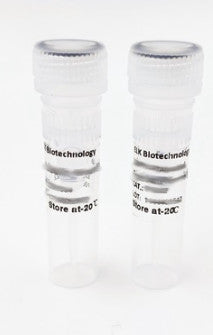
ELK Biotechnology
DcR1 Rabbit Polyclonal Antibody - ES4213
DcR1 Rabbit Polyclonal Antibody - ES4213
Couldn't load pickup availability
DcR1 Rabbit Polyclonal Antibody
Sizes: 50μL, 100μL
Catalogue Numbers: ES4213-50, ES4213-100
Lead times: 1-2 weeks, if manufacturer has product in stock
Manufacturer/Ship Location: China
Background: The protein encoded by this gene is a member of the TNF-receptor superfamily. This receptor contains an extracellular TRAIL-binding domain and a transmembrane domain, but no cytoplasmic death domain. This receptor is not capable of inducing apoptosis, and is thought to function as an antagonistic receptor that protects cells from TRAIL-induced apoptosis. This gene was found to be a p53-regulated DNA damage-inducible gene. The expression of this gene was detected in many normal tissues but not in most cancer cell lines, which may explain the specific sensitivity of cancer cells to the apoptosis-inducing activity of TRAIL. [provided by RefSeq, Jul 2008],
Reactivity: Human, Rat, Mouse,
Host: Rabbit
Applications: WB, ELISA
Alternate Names: TNFRSF10C, DCR1, LIT, TRAILR3, TRID, Tumor necrosis factor receptor superfamily member 10C, Antagonist decoy receptor for TRAIL/Apo-2L, Decoy TRAIL receptor without death domainDecoy receptor 1, DcR1, Lymphocyte inhibitor of TRAIL, TNF-related apoptosis-inducing ligand receptor 3, TRAIL receptor 3, TRAIL-R3, TRAIL receptor without an intracellular domain, CD263
Clonality: Polyclonal
Immunogen: The antiserum was produced against synthesized peptide derived from the Internal region of human TNFRSF10C. AA range:11-60
Isotype: IgG
Target: DcR1
Specificity: DcR1 Polyclonal Antibody detects endogenous levels of DcR1 protein.
Dilution: Western Blot: 1/500 - 1/2000. ELISA: 1/20000. Not yet tested in other applications.
Purification: The antibody was affinity-purified from rabbit antiserum by affinity-chromatography using epitope-specific immunogen.
Concentration: 1 mg/ml,
Formlation: Liquid in PBS containing 50% glycerol, 0.5% BSA and 0.02% sodium azide.
Expression: Higher expression in normal tissues than in tumor cell lines, Highly expressed in peripheral blood lymphocytes, spleen, skeletal muscle, placenta, lung and heart,
Observed Band (KD): 27kD
Fields: Cytokine-cytokine receptor interaction, Viral protein interaction with cytokine and cytokine receptor
Function: Function: Receptor for the cytotoxic ligand TRAIL. Lacks a cytoplasmic death domain and hence is not capable of inducing apoptosis. May protect cells against TRAIL mediated apoptosis by competing with TRAIL-R1 and R2 for binding to the ligand
PTM: N-glycosylated and O-glycosylated
Similarity: Contains 3 TNFR-Cys repeats
Tissue Specificity: Higher expression in normal tissues than in tumor cell lines. Highly expressed in peripheral blood lymphocytes, spleen, skeletal muscle, placenta, lung and heart
Subcellular Location: Cell membrane, Lipid-anchor, GPI-anchor
Storage and Stability: -20°C/1 year
Gene Name: TNFRSF10C
Protein Name: Tumor necrosis factor receptor superfamily member 10C
Research Use Only