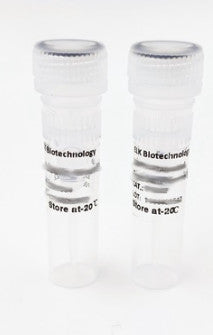
ELK Biotechnology
GSTM3 Rabbit Polyclonal Antibody - ES15872
GSTM3 Rabbit Polyclonal Antibody - ES15872
Couldn't load pickup availability
GSTM3 Rabbit Polyclonal Antibody
Sizes: 50μL, 100μL
Catalogue Numbers: ES15872-50, ES15872-100
Lead times: 1-2 weeks, if manufacturer has product in stock
Manufacturer/Ship Location: China
Background: Cytosolic and membrane-bound forms of glutathione S-transferase are encoded by two distinct supergene families. At present, eight distinct classes of the soluble cytoplasmic mammalian glutathione S-transferases have been identified: alpha, kappa, mu, omega, pi, sigma, theta and zeta. This gene encodes a glutathione S-transferase that belongs to the mu class. The mu class of enzymes functions in the detoxification of electrophilic compounds, including carcinogens, therapeutic drugs, environmental toxins and products of oxidative stress, by conjugation with glutathione. The genes encoding the mu class of enzymes are organized in a gene cluster on chromosome 1p13.3 and are known to be highly polymorphic. These genetic variations can change an individual's susceptibility to carcinogens and toxins as well as affect the toxicity and efficacy of certain drugs. Mutations of this class mu gene have been linked with a slight increase in a number of cancers, likely due to exposure with environmental toxins. Alternative splicing results in multiple transcript variants. [provided by RefSeq, Nov 2008],
Reactivity: Human, Rat, Mouse,
Host: Rabbit
Applications: WB
Clonality: Polyclonal
Immunogen: Synthesized peptide derived from human GSTM3 AA range: 1-51
Isotype: IgG
Target: GSTM3
Specificity: This antibody detects endogenous levels of GSTM3 at Human
Dilution: WB 1:500-2000
Purification: The antibody was affinity-purified from rabbit serum by affinity-chromatography using specific immunogen.
Concentration: 1 mg/ml,
Formlation: Liquid in PBS containing 50% glycerol, 0.5% BSA and 0.02% sodium azide.
Expression: Testis and brain,
Molecular Weight (Da): 25kD
Fields: Glutathione metabolism, Metabolism of xenobiotics by cytochrome P450, Drug metabolism - cytochrome P450, Drug metabolism - other enzymes, Metabolic pathways, Platinum drug resistance, Pathways in cancer, Chemical carcinogenesis - DNA adducts, Chemical carcinogenesis - receptor activation, Chemical carcinogenesis - reactive oxygen species, Hepatocellular carcinoma, Fluid shear stress and atherosclerosis
Function: Catalytic Activity: RX + glutathione = HX + R-S-glutathione
Function: Conjugation of reduced glutathione to a wide number of exogenous and endogenous hydrophobic electrophiles. May govern uptake and detoxification of both endogenous compounds and xenobiotics at the testis and brain blood barriers
PTM: The N-terminus is blocked
Similarity: Belongs to the GST superfamily. Mu family
Similarity: Contains 1 GST C-terminal domain
Similarity: Contains 1 GST N-terminal domain
Subunit: Homodimer
Tissue Specificity: Testis and brain
Subcellular Location: Cytoplasm
Storage and Stability: -20°C/1 year
Gene Name: GSTM3 GST5
Protein Name: GSTM3
Research Use Only