ELK Biotechnology
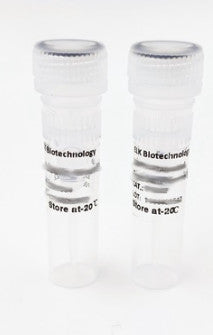
MAFA Rabbit Polyclonal Antibody - ES15057
MAFA Rabbit Polyclonal Antibody - ES15057
Couldn't load pickup availability
MAFA Rabbit Polyclonal Antibody
Sizes: 50μL, 100μL
Catalogue Numbers: ES15057-50, ES15057-100
Lead times: 1-2 weeks, if manufacturer has product in stock
Manufacturer/Ship Location: China
Background: MAFA is a transcription factor that binds RIPE3b, a conserved enhancer element that regulates pancreatic beta cell-specific expression of the insulin gene (INS, MIM 176730) (Olbrot et al., 2002 [PubMed 12011435]).[supplied by OMIM, Mar 2008],
Reactivity: Human, Mouse
Host: Rabbit
Applications: WB
Alternate Names: Transcription factor MafA (Pancreatic beta-cell-specific transcriptional activator) (Transcription factor RIPE3b1) (V-maf musculoaponeurotic fibrosarcoma oncogene homolog A)
Clonality: Polyclonal
Immunogen: Synthesized peptide derived from human MAFA AA range: 204-254
Isotype: IgG
Target: MAFA
Specificity: This antibody detects endogenous levels of MAFA at Human/Mouse
Dilution: WB 1:500-2000
Purification: The antibody was affinity-purified from rabbit serum by affinity-chromatography using specific immunogen.
Concentration: 1 mg/ml,
Formlation: Liquid in PBS containing 50% glycerol, 0.5% BSA and 0.36% sodium azide.
Expression: Expressed in the islets of Langerhans (at protein level),
Observed Band (KD): 38kD
Fields: Type II diabetes mellitus, Maturity onset diabetes of the young
Function: Function: Acts as a transcriptional factor. Specifically binds the insulin enhancer element RIPE3b and activates insulin gene expression. Cooperates synergistically with NEUROD1 and PDX1. Phosphorylation by GSK3 increases its transcriptional activity and is required for its oncogenic activity. Involved either as an oncogene or as a tumor suppressor, depending on the cell context
Induction: Up-regulated by glucose
PTM: Ser-14 and Ser-65 appear to be the major phosphorylation sites. Phosphorylated by MAPK13 on serine and threonine residues (Probable). Phosphorylation by GSK3 requires prior phosphorylation of Ser-65 by another kinase. Phosphorylation proceeds then from Ser-61 to Thr-57, Thr-53 and Ser-49. GSK3-mediated phosphorylation increases its transcriptional activity through the recruitment of the coactivator PCAF, is required for its transforming activity and leads to its degradation
Subcellular Location: Nucleus
Storage and Stability: -20°C/1 year
Gene Name: MAFA
Protein Name: MAFA
Mouse Gene ID: 378435
Mouse SwissProt Number: Q8CF90
Research Use Only