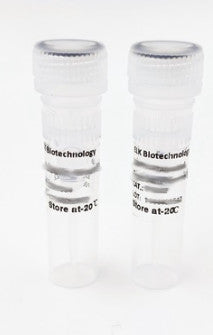
ELK Biotechnology
OLR1 Rabbit Polyclonal Antibody - ES11225
OLR1 Rabbit Polyclonal Antibody - ES11225
Couldn't load pickup availability
OLR1 Rabbit Polyclonal Antibody
Sizes: 50μL, 100μL
Catalogue Numbers: ES11225-50, ES11225-100
Lead times: 1-2 weeks, if manufacturer has product in stock
Manufacturer/Ship Location: China
Background: This gene encodes a low density lipoprotein receptor that belongs to the C-type lectin superfamily. This gene is regulated through the cyclic AMP signaling pathway. The encoded protein binds, internalizes and degrades oxidized low-density lipoprotein. This protein may be involved in the regulation of Fas-induced apoptosis. This protein may play a role as a scavenger receptor. Mutations of this gene have been associated with atherosclerosis, risk of myocardial infarction, and may modify the risk of Alzheimer's disease. Alternate splicing results in multiple transcript variants.[provided by RefSeq, Feb 2010],
Reactivity: Human, Rat, Mouse
Host: Rabbit
Applications: WB, ELISA
Clonality: Polyclonal
Immunogen: Synthesized peptide derived from human protein. at AA range: 60-140
Isotype: IgG
Target: OLR1
Specificity: OLR1 Polyclonal Antibody detects endogenous levels of protein.
Dilution: WB 1:500-2000 ELISA 1:5000-20000
Purification: The antibody was affinity-purified from rabbit antiserum by affinity-chromatography using epitope-specific immunogen.
Concentration: 1 mg/ml,
Formlation: Liquid in PBS containing 50% glycerol, and 0.02% sodium azide.
Expression: Expressed at high level in endothelial cells and vascular-rich organs such as placenta, lung, liver and brain, aortic intima, bone marrow, spinal cord and substantia nigra, Also expressed at the surface of dendritic cells, Widely expressed at intermediate and low level,
Observed Band (KD): 30kD
Fields: PPAR signaling pathway, Phagosome, Lipid and atherosclerosis
Function: Disease: Defects in OLR1 may be a cause of susceptibility to myocardial infarction [MIM: 608557]
Disease: Defects in OLR1 may be associated with susceptibility to Alzheimer disease (AD) [MIM: 104300]. Involvement in AD is however unclear: according to some authors (PubMed: 12354387, PubMed: 12810610 and PubMed: 15976314), variations in OLR1 modify the risk of AD, while according to other (PubMed: 15000751 and PubMed: 15060104) they do not
Domain: The C-type lectin domain mediates the recognition and binding of oxLDL
Domain: The cytoplasmic region is required for subcellular sorting on the cell surface
Function: Receptor that mediates the recognition, internalization and degradation of oxidatively modified low density lipoprotein (oxLDL) by vascular endothelial cells. OxLDL is a marker of atherosclerosis that induces vascular endothelial cell activation and dysfunction, resulting in pro-inflammat
Subcellular Location: Cell membrane, Lipid-anchor Cell membrane, Single-pass type II membrane protein Membrane raft Secreted A secreted form also exists Localization to membrane rafts requires palmitoylation
Storage and Stability: -20°C/1 year
Gene Name: OLR1 CLEC8A LOX1
Protein Name: Oxidized low-density lipoprotein receptor 1 (Ox-LDL receptor 1) (C-type lectin domain family 8 member A) (Lectin-like oxidized LDL receptor 1) (LOX-1) (Lectin-like oxLDL receptor 1) (hLOX-1) (Lectin-t
Mouse SwissProt Number: Q9EQ09
Rat SwissProt Number: O70156
Research Use Only