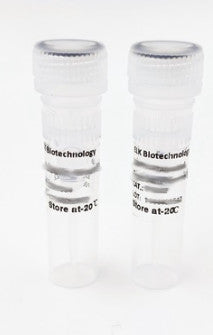
ELK Biotechnology
Op18 (phospho Ser38) Rabbit Polyclonal Antibody - ES1376
Op18 (phospho Ser38) Rabbit Polyclonal Antibody - ES1376
Couldn't load pickup availability
Op18 (phospho Ser38) Rabbit Polyclonal Antibody
Sizes: 50μL, 100μL
Catalogue Numbers: ES1376-50, ES1376-100
Lead times: 1-2 weeks, if manufacturer has product in stock
Manufacturer/Ship Location: China
Background: This gene belongs to the stathmin family of genes. It encodes a ubiquitous cytosolic phosphoprotein proposed to function as an intracellular relay integrating regulatory signals of the cellular environment. The encoded protein is involved in the regulation of the microtubule filament system by destabilizing microtubules. It prevents assembly and promotes disassembly of microtubules. Multiple transcript variants encoding different isoforms have been found for this gene. [provided by RefSeq, Feb 2009],
Reactivity: Human, Mouse, Rat, Monkey
Host: Rabbit
Applications: WB, IHC, IF, ELISA
Alternate Names: STMN1, C1orf215, LAP18, OP18, Stathmin, Leukemia-associated phosphoprotein p18, Metablastin, Oncoprotein 18, Op18, Phosphoprotein p19, pp19, Prosolin, Protein Pr22, pp17
Clonality: Polyclonal
Immunogen: The antiserum was produced against synthesized peptide derived from human Stathmin 1 around the phosphorylation site of Ser37. AA range:5-54
Isotype: IgG
Target: Op18
Specificity: Phospho-Op18 (S38) Polyclonal Antibody detects endogenous levels of Op18 protein only when phosphorylated at S38.
Dilution: Western Blot: 1/500 - 1/2000. Immunohistochemistry: 1/100 - 1/300. ELISA: 1/20000. Not yet tested in other applications.
Purification: The antibody was affinity-purified from rabbit antiserum by affinity-chromatography using epitope-specific immunogen.
Concentration: 1 mg/ml,
Formlation: Liquid in PBS containing 50% glycerol, 0.5% BSA and 0.02% sodium azide.
Expression: Ubiquitous, Expression is strongest in fetal and adult brain, spinal cord, and cerebellum, followed by thymus, bone marrow, testis, and fetal liver, Expression is intermediate in colon, ovary, placenta, uterus, and trachea, and is readily detected at substantially lower levels in all other tissues examined, Lowest expression is found in adult liver, Present in much greater abundance in cells from patients with acute leukemia of different subtypes than in normal peripheral blood lymphocytes, non-leukemic proliferating lymphoid cells, bone marrow cells, or cells from patients with chronic lymphoid or myeloid leukemia,
Observed Band (KD): 18kD
Fields: MAPK signaling pathway, MicroRNAs in cancer
Function: Disease: Present in much greater abundance in cells from patients with acute leukemia of different subtypes than in normal peripheral blood lymphocytes, non-leukemic proliferating lymphoid cells, bone marrow cells, or cells from patients with chronic lymphoid or myeloid leukemia
Function: Involved in the regulation of the microtubule (MT) filament system by destabilizing microtubules. Prevents assembly and promotes disassembly of microtubules. Phosphorylation at Ser-16 may be required for axon formation during neurogenesis. Involved in the control of the learned and innate fear
PTM: Many different phosphorylated forms are observed depending on specific combinations among the sites which can be phosphorylated. MAPK is responsible for the phosphorylation of stathmin in response to NGF. Phosphorylation at Ser-16 seems to be required for neuron polarization (By similarity). Phosphorylation at
Subcellular Location: Cytoplasm, cytoskeleton
Storage and Stability: -20°C/1 year
Gene Name: STMN1
Protein Name: Stathmin
Mouse Gene ID: 16765
Mouse SwissProt Number: P54227
Rat Gene ID: 29332
Rat SwissProt Number: P13668
Research Use Only