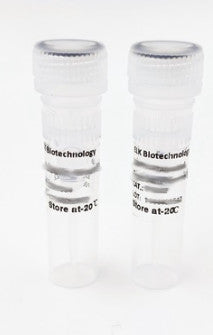
ELK Biotechnology
VSX1 Rabbit Polyclonal Antibody - ES10661
VSX1 Rabbit Polyclonal Antibody - ES10661
Couldn't load pickup availability
VSX1 Rabbit Polyclonal Antibody
Sizes: 50μL, 100μL
Catalogue Numbers: ES10661-50, ES10661-100
Lead times: 1-2 weeks, if manufacturer has product in stock
Manufacturer/Ship Location: China
Background: The protein encoded by this gene contains a paired-like homeodomain and binds to the core of the locus control region of the red/green visual pigment gene cluster. The encoded protein may regulate expression of the cone opsin genes early in development. Mutations in this gene can cause posterior polymorphous corneal dystrophy and keratoconus. Alternatively spliced transcript variants encoding different isoforms have been described. [provided by RefSeq, Jul 2008],
Reactivity: Human, Mouse
Host: Rabbit
Applications: WB, ELISA
Clonality: Polyclonal
Immunogen: Synthesized peptide derived from part region of human protein
Isotype: IgG
Target: VSX1
Specificity: VSX1 Polyclonal Antibody detects endogenous levels of protein.
Dilution: WB 1:500-2000 ELISA 1:5000-20000
Purification: The antibody was affinity-purified from rabbit antiserum by affinity-chromatography using epitope-specific immunogen.
Concentration: 1 mg/ml,
Formlation: Liquid in PBS containing 50% glycerol, and 0.02% sodium azide.
Expression: In the adult eye, expressed in lens, iris, ciliary body, choroid, optical nerve head and, most strongly, in retina, but not expressed in sclera and cornea, According to PubMed:11978762, expressed in adult retina but not in lens and cornea, Within adult retina, found exclusively in the inner nuclear layer, Isoform 1, isoform 2, isoform 3 and isoform 4 expressed in adult retina, but not in brain, heart, kidney, liver, lung, pancreas, placenta and skeletal muscle, Not expressed in thymus and spleen, Expressed in embryonic craniofacial tissue, Expressed in fetal (week 14) retina, Strongly expressed in neonatal retina, weakly in neonatal lens, choroid and cornea (day 1, 4, month 9),
Observed Band (KD): 40kD
Function: Alternative Products: Additional isoforms seem to exist,Disease: Defects in VSX1 are a cause of keratoconus [MIM: 148300]. It is a frequent corneal dystrophy with an incidence that varies from 50 to 230 per 100'000. The cornea assumes a conical shape as a result of a progressive non-inflammatory thinning of the corneal stroma. Keratoconus is most often an isolated sporadic condition with cases of autosomal dominant and autosomal recessive transmission
Disease: Defects in VSX1 are a cause of posterior polymorphous corneal dystrophy (PPCD) [MIM: 122000]. PPCD is a slowly progressive hereditary disorder of the corneal endothelium that leads to a variable degree of visual impairment usually in adulthood. PPCD is usually inherited as an autosomal dominant trait
Function: Binds to the 37-bp core of the locus control region (LCR) of the red/green visual pigment gene cluster. May regulate the activi
Subcellular Location: Nucleus
Storage and Stability: -20°C/1 year
Gene Name: VSX1 RINX
Protein Name: Visual system homeobox 1 (Homeodomain protein RINX) (Retinal inner nuclear layer homeobox protein) (Transcription factor VSX1)
Mouse SwissProt Number: Q91V10
Research Use Only