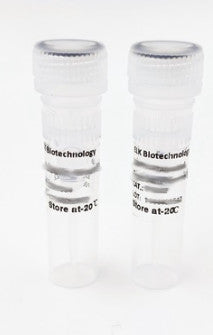
ELK Biotechnology
ATPAF2 Rabbit Polyclonal Antibody - ES1731
ATPAF2 Rabbit Polyclonal Antibody - ES1731
Couldn't load pickup availability
ATPAF2 Rabbit Polyclonal Antibody
Sizes: 50μL, 100μL
Catalogue Numbers: ES1731-50, ES1731-100
Lead times: 1-2 weeks, if manufacturer has product in stock
Manufacturer/Ship Location: China
Background: ATP synthase mitochondrial F1 complex assembly factor 2(ATPAF2) Homo sapiens This gene encodes an assembly factor for the F(1) component of the mitochondrial ATP synthase. This protein binds specifically to the F1 alpha subunit and is thought to prevent this subunit from forming nonproductive homooligomers during enzyme assembly. This gene is located within the Smith-Magenis syndrome region on chromosome 17. An alternatively spliced transcript variant has been described, but its biological validity has not been determined. [provided by RefSeq, Jul 2008],
Reactivity: Human, Mouse
Host: Rabbit
Applications: WB, ELISA
Alternate Names: ATPAF2, ATP12, LP3663, ATP synthase mitochondrial F1 complex assembly factor 2, ATP12 homolog
Clonality: Polyclonal
Immunogen: The antiserum was produced against synthesized peptide derived from human ATPAF2. AA range:21-70
Isotype: IgG
Target: ATPAF2
Specificity: ATPAF2 Polyclonal Antibody detects endogenous levels of ATPAF2 protein.
Dilution: Western Blot: 1/500 - 1/2000. ELISA: 1/40000. Not yet tested in other applications.
Purification: The antibody was affinity-purified from rabbit antiserum by affinity-chromatography using epitope-specific immunogen.
Concentration: 1 mg/ml,
Formlation: Liquid in PBS containing 50% glycerol, 0.5% BSA and 0.02% sodium azide.
Expression: Widely expressed,
Observed Band (KD): 35kD
Function: Disease: Defects in ATPAF2 are the cause of complex V mitochondrial respiratory chain ATPAF2 subunit deficiency (ATPAF2 deficiency) [MIM: 604273], also called ATP synthase deficiency or ATPase deficiency. ATPAF2 deficiency seems to be an early presenting disease in which lactic acidosis, dysmorphic features, and methyl glutaconic aciduria can be major clues in the diagnosis. Dysmorphic features include a large mouth, prominent nasal bridge, micrognathia, rocker-bottom feet and flexion contractures of the limbs associated with camptodactyly. Patients are hypertonic and have an enlarged liver, hypoplastic kidneys and elevated lactate levels in urine, plasma and cerebro spinal fluid (CSF)
Function: May play a role in the assembly of the F1 component of the mitochondrial ATP synthase (ATPase)
Similarity: Belongs to the ATP12 family
Subunit: Interacts with ATP5A1
Tissue Specificity: Widely expr
Subcellular Location: Mitochondrion
Storage and Stability: -20°C/1 year
Gene Name: ATPAF2
Protein Name: ATP synthase mitochondrial F1 complex assembly factor 2
Mouse Gene ID: 246782
Mouse SwissProt Number: Q91YY4
Research Use Only