ELK Biotechnology
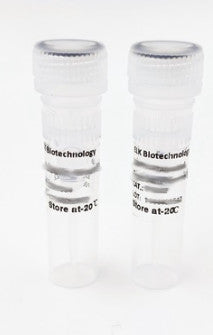
BBS7 Rabbit Polyclonal Antibody - ES18092
BBS7 Rabbit Polyclonal Antibody - ES18092
Couldn't load pickup availability
BBS7 Rabbit Polyclonal Antibody
Sizes: 50μL, 100μL
Catalogue Numbers: ES18092-50, ES18092-100
Lead times: 1-2 weeks, if manufacturer has product in stock
Manufacturer/Ship Location: China
Background: This gene encodes one of eight proteins that form the BBSome complex containing BBS1, BBS2, BBS4, BBS5, BBS7, BBS8, BBS9 and BBIP10. The BBSome complex is believed to recruit Rab8(GTP) to the primary cilium and promote ciliogenesis. The BBSome complex assembly is mediated by a complex composed of three chaperonin-like BBS proteins (BBS6, BBS10, and BBS12) and CCT/TRiC family chaperonins. Mutations in this gene are implicated in Bardet-Biedl syndrome, a genetic disorder whose symptoms include obesity, retinal degeneration, polydactyly and nephropathy, however, mutations in this gene and the BBS8 gene are thought to play a minor role and mutations in chaperonin-like BBS genes are found to be a major contributor to disease development in a multiethnic Bardet-Biedl syndrome patient population. Two transcript variants encoding distinct isoforms have been identified for this gene.[provided by RefSeq, Oct 2014],
Reactivity: Human, Mouse
Host: Rabbit
Applications: WB
Clonality: Polyclonal
Immunogen: Synthesized peptide derived from human BBS7 AA range: 85-135
Isotype: IgG
Target: BBS7
Specificity: This antibody detects endogenous levels of BBS7 at Human/Mouse
Dilution: WB 1:500-2000
Purification: The antibody was affinity-purified from rabbit serum by affinity-chromatography using specific immunogen.
Concentration: 1 mg/ml,
Formlation: Liquid in PBS containing 50% glycerol, 0.5% BSA and 0.02% sodium azide.
Expression: Isoform 2 is ubiquitously expressed, Isoform 1 is expressed in retina, lung, liver, testis, ovary, prostate, small intestine, liver, brain, heart and pancreas,
Molecular Weight (Da): 79kD
Function: Disease: Defects in BBS7 are a cause of Bardet-Biedl syndrome type 7 (BBS7) [MIM: 209900]. Bardet-Biedl syndrome (BBS) is a genetically heterogeneous disorder characterized by usually severe pigmentary retinopathy, early onset obesity, polydactyly, hypogenitalism, renal malformation and mental retardation. Secondary features include diabetes mellitus, hypertension and congenital heart disease. A relatively high incidence of BBS is found in the mixed Arab populations of Kuwait and in Bedouin tribes throughout the Middle East, most likely due to the high rate of consaguinity in these populations and a founder effect. Inheritance is autosomal recessive, but three mutated alleles (two at one locus, and a third at a second locus) may be required for disease manifestation in some cases (triallelic inheritance)
Function: The BBSome complex is required for ciliogenesis but is dispensable for centr
Subcellular Location: Cell projection, cilium membrane Cytoplasm Cytoplasm, cytoskeleton, microtubule organizing center, centrosome, centriolar satellite Cytoplasm, cytoskeleton, cilium basal body
Storage and Stability: -20°C/1 year
Gene Name: BBS7 BBS2L1
Protein Name: BBS7
Mouse Gene ID: 71492
Mouse SwissProt Number: Q8K2G4
Research Use Only