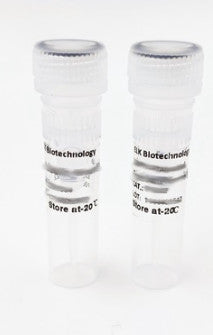
ELK Biotechnology
Bcl-2 (phospho Thr69) Rabbit Polyclonal Antibody - ES7019
Bcl-2 (phospho Thr69) Rabbit Polyclonal Antibody - ES7019
Couldn't load pickup availability
Bcl-2 (phospho Thr69) Rabbit Polyclonal Antibody
Sizes: 50μL, 100μL
Catalogue Numbers: ES7019-50, ES7019-100
Lead times: 1-2 weeks, if manufacturer has product in stock
Manufacturer/Ship Location: China
Background: BCL2, apoptosis regulator(BCL2) Homo sapiens This gene encodes an integral outer mitochondrial membrane protein that blocks the apoptotic death of some cells such as lymphocytes. Constitutive expression of BCL2, such as in the case of translocation of BCL2 to Ig heavy chain locus, is thought to be the cause of follicular lymphoma. Alternative splicing results in multiple transcript variants. [provided by RefSeq, Feb 2016],
Reactivity: Human, Rat, Mouse,
Host: Rabbit
Applications: IHC, IF, ELISA
Alternate Names: BCL2, Apoptosis regulator Bcl-2
Clonality: Polyclonal
Immunogen: The antiserum was produced against synthesized peptide derived from human BCL-2 around the phosphorylation site of Thr69. AA range:46-95
Isotype: IgG
Target: Bcl-2
Specificity: Phospho-Bcl-2 (T69) Polyclonal Antibody detects endogenous levels of Bcl-2 protein only when phosphorylated at T69.
Dilution: Immunohistochemistry: 1/100 - 1/300. Immunofluorescence: 1/200 - 1/1000. ELISA: 1/20000. Not yet tested in other applications.
Purification: The antibody was affinity-purified from rabbit antiserum by affinity-chromatography using epitope-specific immunogen.
Concentration: 1 mg/ml,
Formlation: Liquid in PBS containing 50% glycerol, 0.5% BSA and 0.02% sodium azide.
Expression: Expressed in a variety of tissues,
Molecular Weight (Da): 26kD
Fields: EGFR tyrosine kinase inhibitor resistance, Endocrine resistance, Platinum drug resistance, NF-kappa B signaling pathway, HIF-1 signaling pathway, Sphingolipid signaling pathway, p53 signaling pathway, Autophagy - animal, Protein processing in endoplasmic reticulum, PI3K-Akt signaling pathway, Apoptosis, Apoptosis - multiple species, Necroptosis, Adrenergic signaling in cardiomyocytes, Hedgehog signaling pathway, Focal adhesion, NOD-like receptor signaling pathway, JAK-STAT signaling pathway, Neurotrophin signaling pathway, Cholinergic synapse, Estrogen signaling pathway, Parathyroid hormone synthesis, secretion and action, AGE-RAGE signaling pathway in diabetic complications, Amyotrophic lateral sclerosis, Pathways of neurodegeneration - multiple diseases, Shigellosis, Salmonella infection, Toxoplasmosis, Tuberculosis, Hepatitis B, Measles, Herpes simplex virus 1 infection, Epstein-Barr virus infection, Human immunodeficiency virus 1 infection, Pathw
Function: Disease: A chromosomal aberration involving BCL2 may be a cause of follicular lymphoma (FL) [MIM: 151430], also known as type II chronic lymphatic leukemia. Translocation t(14, 18)(q32, q21) with immunoglobulin gene regions. BCL2 mutations found in non-Hodgkin lymphomas carrying the chromosomal translocation could be attributed to the Ig somatic hypermutation mechanism resulting in nucleotide transitions
Domain: The BH4 motif is required for anti-apoptotic activity and for interaction with RAF-1
Function: Suppresses apoptosis in a variety of cell systems including factor-dependent lymphohematopoietic and neural cells. Regulates cell death by controlling the mitochondrial membrane permeability. Appears to function in a feedback loop system with caspases. Inhibits caspase activity either by preventing the release of cytochrome c from the mitochondria and/or by binding to the apoptosis-activati
Subcellular Location: Mitochondrion outer membrane, Single-pass membrane protein Nucleus membrane, Single-pass membrane protein Endoplasmic reticulum membrane, Single-pass membrane protein Cytoplasm
Storage and Stability: -20°C/1 year
Gene Name: BCL2
Protein Name: Apoptosis regulator Bcl-2
Mouse SwissProt Number: P10417
Research Use Only