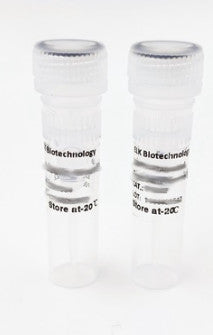
ELK Biotechnology
CA VI Rabbit Polyclonal Antibody - ES1814
CA VI Rabbit Polyclonal Antibody - ES1814
Couldn't load pickup availability
CA VI Rabbit Polyclonal Antibody
Sizes: 50μL, 100μL
Catalogue Numbers: ES1814-50, ES1814-100
Lead times: 1-2 weeks, if manufacturer has product in stock
Manufacturer/Ship Location: China
Background: The protein encoded by this gene is one of several isozymes of carbonic anhydrase. This protein is found only in salivary glands and saliva and protein may play a role in the reversible hydratation of carbon dioxide though its function in saliva is unknown. [provided by RefSeq, Jul 2008],
Reactivity: Human
Host: Rabbit
Applications: WB, ELISA
Alternate Names: CA6, Carbonic anhydrase 6, Carbonate dehydratase VI, Carbonic anhydrase VI, CA-VI, Salivary carbonic anhydrase, Secreted carbonic anhydrase
Clonality: Polyclonal
Immunogen: The antiserum was produced against synthesized peptide derived from human CA6. AA range:231-280
Isotype: IgG
Target: CA VI
Specificity: CA VI Polyclonal Antibody detects endogenous levels of CA VI protein.
Dilution: Western Blot: 1/500 - 1/2000. ELISA: 1/20000. Not yet tested in other applications.
Purification: The antibody was affinity-purified from rabbit antiserum by affinity-chromatography using epitope-specific immunogen.
Concentration: 1 mg/ml,
Formlation: Liquid in PBS containing 50% glycerol, 0.5% BSA and 0.02% sodium azide.
Expression: Major constituent of saliva,
Observed Band (KD): 35kD
Fields: Nitrogen metabolism, Metabolic pathways
Function: Catalytic Activity: H(2)CO(3) = CO(2) + H(2)O
Cofactor: Zinc
Function: Reversible hydration of carbon dioxide. Its role in saliva is unknown
Similarity: Belongs to the alpha-carbonic anhydrase family
Tissue Specificity: Major constituent of saliva
Subcellular Location: Secreted
Storage and Stability: -20°C/1 year
Gene Name: CA6
Protein Name: Carbonic anhydrase 6
Mouse SwissProt Number: P18761
Research Use Only