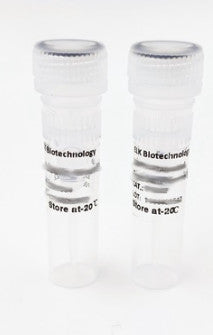
ELK Biotechnology
CCHCR Rabbit Polyclonal Antibody - ES17763
CCHCR Rabbit Polyclonal Antibody - ES17763
Couldn't load pickup availability
CCHCR Rabbit Polyclonal Antibody
Sizes: 50μL, 100μL
Catalogue Numbers: ES17763-50, ES17763-100
Lead times: 1-2 weeks, if manufacturer has product in stock
Manufacturer/Ship Location: China
Reactivity: Human, Mouse
Host: Rabbit
Applications: WB
Clonality: Polyclonal
Immunogen: Synthesized peptide derived from human CCHCR AA range: 180-230
Isotype: IgG
Target: CCHCR
Specificity: This antibody detects endogenous levels of CCHCR at Human/Mouse
Dilution: WB 1:500-2000
Purification: The antibody was affinity-purified from rabbit serum by affinity-chromatography using specific immunogen.
Concentration: 1 mg/ml,
Formlation: Liquid in PBS containing 50% glycerol, 0.5% BSA and 0.02% sodium azide.
Expression: Found in all tissues tested, abundantly expressed in heart, liver, skeletal muscle, kidney and pancreas, and to a lesser extent in lung and placenta, Overexpressed in keratinocytes of psoriatic lesions,
Molecular Weight (Da): 86kD
Function: Function: May be a regulator of keratinocyte proliferation or differentiation
polymorphism: HCR*WWCC is associated with susceptibility to psoriasis. Psoriasis is a chronic inflammatory dermatosis that affects approximately 2% of the population. It is a multifactorial disease characterized by red, scaly skin lesions that are usually found on the scalp, elbows, and knees, and may be associated with severe arthritis. The lesions are caused by hyperproliferative keratinocytes and infiltration of inflammatory cells into the dermis and epidermis. The usual age of onset of psoriasis is between 15 and 30 years, although it can present at any age. Association of HCR with psoriasis seem to be due to linkage disequilibrium with CW*0602 (PubMed: 11348465). HCR is unlikely to be directly involved in psoriasis development
Tissue Specificity: Found in all tissues tested, abundantly expressed in heart, li
Subcellular Location: Cytoplasm Nucleus
Storage and Stability: -20°C/1 year
Gene Name: CCHCR1 C6orf18 HCR
Protein Name: CCHCR
Mouse Gene ID: 240084
Mouse SwissProt Number: Q8K2I2
Research Use Only