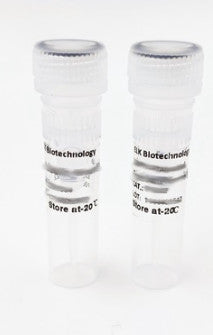
ELK Biotechnology
CD26 Rabbit Polyclonal Antibody - ES8387
CD26 Rabbit Polyclonal Antibody - ES8387
Couldn't load pickup availability
CD26 Rabbit Polyclonal Antibody
Sizes: 50μL, 100μL
Catalogue Numbers: ES8387-50, ES8387-100
Lead times: 1-2 weeks, if manufacturer has product in stock
Manufacturer/Ship Location: China
Background: The protein encoded by this gene is identical to adenosine deaminase complexing protein-2, and to the T-cell activation antigen CD26. It is an intrinsic membrane glycoprotein and a serine exopeptidase that cleaves X-proline dipeptides from the N-terminus of polypeptides. [provided by RefSeq, Jul 2008],
Reactivity: Human, Rat, Mouse,
Host: Rabbit
Applications: WB, IHC, IF, ELISA
Alternate Names: DPP4, ADCP2, CD26, Dipeptidyl peptidase 4, ADABP, Adenosine deaminase complexing protein 2, ADCP-2, Dipeptidyl peptidase IV, DPP IV, T-cell activation antigen CD26, TP103, CD26
Clonality: Polyclonal
Immunogen: The antiserum was produced against synthesized peptide derived from the Internal region of human DPP4. AA range:350-400
Isotype: IgG
Target: CD26
Specificity: CD26 Polyclonal Antibody detects endogenous levels of CD26 protein.
Dilution: Western Blot: 1/500 - 1/2000. IHC-p: 1:100-1:300. ELISA: 1/10000. Not yet tested in other applications.
Purification: The antibody was affinity-purified from rabbit antiserum by affinity-chromatography using epitope-specific immunogen.
Concentration: 1 mg/ml,
Formlation: Liquid in PBS containing 50% glycerol, 0.5% BSA and 0.02% sodium azide.
Expression: Expressed specifically in lymphatic vessels but not in blood vessels in the skin, small intestine, esophagus, ovary, breast and prostate glands, Not detected in lymphatic vessels in the lung, kidney, uterus, liver and stomach (at protein level), Expressed in the poorly differentiated crypt cells of the small intestine as well as in the mature villous cells, Expressed at very low levels in the colon,
Observed Band (KD): 105kD
Fields: Protein digestion and absorption
Function: Catalytic Activity: Release of an N-terminal dipeptide, Xaa-Yaa-|-Zaa-, from a polypeptide, preferentially when Yaa is Pro, provided Zaa is neither Pro nor hydroxyproline
Function: Removes N-terminal dipeptides sequentially from polypeptides having unsubstituted N-termini provided that the penultimate residue is proline. Plays a role in T-cell activation
Online Information: Dipeptidyl peptidase-4 entry,PTM: The soluble form (SDPP) derives from the membrane form (MDPP) by proteolytic processing
Similarity: Belongs to the peptidase S9B family. DPPIV subfamily
Subunit: Homodimer or heterodimer with Seprase (FAP)
Tissue Specificity: Expressed in the poorly differentiated crypt cells of the small intestine as well as in the mature villous cells. Expressed at very low levels in the colon
Subcellular Location: [Dipeptidyl peptidase 4 soluble form]: Secreted Detected in the serum and the seminal fluid, Cell membrane, Single-pass type II membrane protein Apical cell membrane, Single-pass type II membrane protein Cell projection, invadopodium membrane, Single-pass type II membrane protein Cell projection, lamellipodium membrane, Single-pass type II membrane protein Cell junction Membrane raft Translocated to the apical membrane through the concerted action of N- and O-Glycans and its association with lipid microdomains containing cholesterol and sphingolipids (PubMed:11773049) Redistributed to membrane rafts in T-cell in an interleukin-12-dependent activation (PubMed:12676959) Its interaction with CAV1 is necessary for its translocation to membrane rafts (PubMed:17287217) Coloca
Storage and Stability: -20°C/1 year
Gene Name: DPP4
Protein Name: Dipeptidyl peptidase 4
Mouse SwissProt Number: P28843
Research Use Only