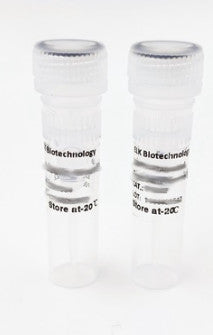
ELK Biotechnology
CEP290 Rabbit Polyclonal Antibody - ES1950
CEP290 Rabbit Polyclonal Antibody - ES1950
Couldn't load pickup availability
CEP290 Rabbit Polyclonal Antibody
Sizes: 50μL, 100μL
Catalogue Numbers: ES1950-50, ES1950-100
Lead times: 1-2 weeks, if manufacturer has product in stock
Manufacturer/Ship Location: China
Background: centrosomal protein 290(CEP290) Homo sapiens This gene encodes a protein with 13 putative coiled-coil domains, a region with homology to SMC chromosome segregation ATPases, six KID motifs, three tropomyosin homology domains and an ATP/GTP binding site motif A. The protein is localized to the centrosome and cilia and has sites for N-glycosylation, tyrosine sulfation, phosphorylation, N-myristoylation, and amidation. Mutations in this gene have been associated with Joubert syndrome and nephronophthisis and the presence of antibodies against this protein is associated with several forms of cancer. [provided by RefSeq, Jul 2008],
Reactivity: Human, Mouse
Host: Rabbit
Applications: WB, ELISA
Alternate Names: CEP290, BBS14, KIAA0373, NPHP6, Centrosomal protein of 290 kDa, Cep290, Bardet-Biedl syndrome 14 protein, Cancer/testis antigen 87, CT87, Nephrocystin-6, Tumor antigen se2-2
Clonality: Polyclonal
Immunogen: The antiserum was produced against synthesized peptide derived from human CEP290. AA range:771-820
Isotype: IgG
Target: CEP290
Specificity: CEP290 Polyclonal Antibody detects endogenous levels of CEP290 protein.
Dilution: Western Blot: 1/500 - 1/2000. ELISA: 1/20000. Not yet tested in other applications.
Purification: The antibody was affinity-purified from rabbit antiserum by affinity-chromatography using epitope-specific immunogen.
Concentration: 1 mg/ml,
Formlation: Liquid in PBS containing 50% glycerol, 0.5% BSA and 0.02% sodium azide.
Expression: Ubiquitous, Expressed strongly in placenta and weakly in brain,
Observed Band (KD): 290kD
Function: Disease: Antibodies against CEP290 are present in sera from patients with cutaneous T-cell lymphomas, but not in the healthy control population
Disease: Defects in CEP290 are a cause of Joubert syndrome type 5 (JBTS5) [MIM: 610188]. Joubert syndrome is an autosomal recessive disease characterized by cerebellar vermis hypoplasia with prominent superior cerebellar peduncles (the 'molar tooth sign' on axial magnetic resonance imaging), psychomotor delay, hypotonia, ataxia, oculomotor apraxia and neonatal breathing abnormalities. JBTS5 shares the neurologic and neuroradiologic features of Joubert syndrome together with severe retinal dystrophy and/or progressive renal failure characterized by nephronophthisis
Disease: Defects in CEP290 are a cause of Senior-Loken syndrome type 6 (SLSN6) [MIM: 610189]. Senior-Loken syndrome is also known as juvenile nephronophthisis with Leber amaurosis. It is a
Subcellular Location: Cytoplasm, cytoskeleton, microtubule organizing center, centrosome Cytoplasm, cytoskeleton, microtubule organizing center, centrosome, centriolar satellite Nucleus Cell projection, cilium Cytoplasm, cytoskeleton, cilium basal body Cytoplasm, cytoskeleton, microtubule organizing center, centrosome, centriole Cytoplasmic vesicle Displaced from centriolar satellites in response to cellular stress, such as ultraviolet light (UV) radiation or heat shock (PubMed:24121310) Found in the connecting cilium of photoreceptor cells, base of cilium in kidney intramedullary collecting duct cells (By similarity) Localizes at the transition zone, a region between the basal body and the ciliary axoneme (PubMed:23943788) Localization at the ciliary transition zone as well as at centriolar sa
Storage and Stability: -20°C/1 year
Gene Name: CEP290
Protein Name: Centrosomal protein of 290 kDa
Mouse Gene ID: 216274
Mouse SwissProt Number: Q6A078
Research Use Only