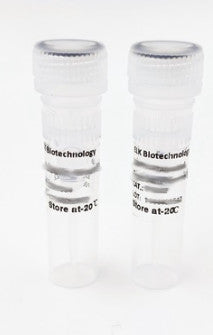
ELK Biotechnology
Cleaved-Cathepsin L1 HC (T288) Rabbit Polyclonal Antibody - ES1029
Cleaved-Cathepsin L1 HC (T288) Rabbit Polyclonal Antibody - ES1029
Couldn't load pickup availability
Cleaved-Cathepsin L1 HC (T288) Rabbit Polyclonal Antibody
Sizes: 50μL, 100μL
Catalogue Numbers: ES1029-50, ES1029-100
Lead times: 1-2 weeks, if manufacturer has product in stock
Manufacturer/Ship Location: China
Background: The protein encoded by this gene is a lysosomal cysteine proteinase that plays a major role in intracellular protein catabolism. Its substrates include collagen and elastin, as well as alpha-1 protease inhibitor, a major controlling element of neutrophil elastase activity. The encoded protein has been implicated in several pathologic processes, including myofibril necrosis in myopathies and in myocardial ischemia, and in the renal tubular response to proteinuria. This protein, which is a member of the peptidase C1 family, is a dimer composed of disulfide-linked heavy and light chains, both produced from a single protein precursor. Multiple alternatively spliced transcript variants have been found for this gene. [provided by RefSeq, Apr 2012],
Reactivity: Human, Rat, Mouse,
Host: Rabbit
Applications: WB, ELISA
Alternate Names: CTSL1, CTSL, Cathepsin L1, Major excreted protein, MEP
Clonality: Polyclonal
Immunogen: The antiserum was produced against synthesized peptide derived from human CATL1. AA range:239-288
Isotype: IgG
Target: Cathepsin L
Specificity: Cleaved-Cathepsin L1 HC (T288) Polyclonal Antibody detects endogenous levels of fragment of activated Cathepsin L1 HC protein resulting from cleavage adjacent to T288.
Dilution: Western Blot: 1/500 - 1/2000. ELISA: 1/10000. Not yet tested in other applications.
Purification: The antibody was affinity-purified from rabbit antiserum by affinity-chromatography using epitope-specific immunogen.
Concentration: 1 mg/ml,
Formlation: Liquid in PBS containing 50% glycerol, 0.5% BSA and 0.02% sodium azide.
Expression: Cartilage, Colon endothelium, Liver, Plasma, Prostate,
Observed Band (KD): 30kD
Fields: Autophagy - animal, Lysosome, Phagosome, Apoptosis, Antigen processing and presentation, Proteoglycans in cancer, Rheumatoid arthritis, Fluid shear stress and atherosclerosis
Function: Catalytic Activity: Specificity close to that of papain. As compared to cathepsin B, cathepsin L exhibits higher activity toward protein substrates, but has little activity on Z-Arg-Arg-NHMec, and no peptidyl-dipeptidase activity
Function: Important for the overall degradation of proteins in lysosomes
Similarity: Belongs to the peptidase C1 family
Subunit: Dimer of a heavy and a light chain linked by disulfide bonds
Subcellular Location: Lysosome Apical cell membrane, Peripheral membrane protein, Extracellular side Cytoplasmic vesicle, secretory vesicle, chromaffin granule Secreted, extracellular space Secreted Localizes to the apical membrane of thyroid epithelial cells Released at extracellular space by activated dendritic cells and macrophages, [Isoform 2]: Nucleus Translation initiation at downstream start sites allows the synthesis of isoforms that are devoid of a signal peptide and do not transit through the endoplasmic reticulum to localize to the nucleus (PubMed:15099520) Nuclear location varies during the cell cycle, with higher levels during S phase (PubMed:15099520)
Storage and Stability: -20°C/1 year
Gene Name: CTSL1
Protein Name: Cathepsin L1
Mouse SwissProt Number: P06797
Research Use Only