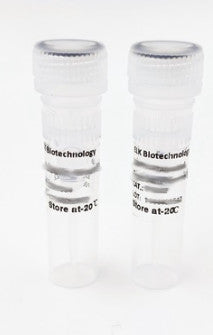
ELK Biotechnology
DU4L7 Rabbit Polyclonal Antibody - ES16882
DU4L7 Rabbit Polyclonal Antibody - ES16882
Couldn't load pickup availability
DU4L7 Rabbit Polyclonal Antibody
Sizes: 50μL, 100μL
Catalogue Numbers: ES16882-50, ES16882-100
Lead times: 1-2 weeks, if manufacturer has product in stock
Manufacturer/Ship Location: China
Background: This gene is located within a D4Z4 repeat array in the subtelomeric region of chromosome 4q. The D4Z4 repeat is polymorphic in length and a similar D4Z4 repeat array has been identified on chromosome 10. Each D4Z4 repeat unit has an open reading frame (named DUX4) that encodes two homeoboxes, the repeat-array and ORF is conserved in other mammals. There is no evidence for transcription of the gene at this locus though RT-PCR and in vitro expression experiments indicate that a telomeric paralog of this gene is transcribed in some haplotypes. Contraction of the macrosatellite repeat causes autosomal dominant facioscapulohumeral muscular dystrophy (FSHD). [provided by RefSeq, Jun 2014],
Reactivity: Human, Rat, Mouse,
Host: Rabbit
Applications: WB
Clonality: Polyclonal
Immunogen: Synthesized peptide derived from human DU4L7 AA range: 314-364
Isotype: IgG
Target: DU4L7
Specificity: This antibody detects endogenous levels of DU4L7 at Human
Dilution: WB 1:500-2000
Purification: The antibody was affinity-purified from rabbit serum by affinity-chromatography using specific immunogen.
Concentration: 1 mg/ml,
Formlation: Liquid in PBS containing 50% glycerol, 0.5% BSA and 0.02% sodium azide.
Molecular Weight (Da): 47kD
Function: Disease: Defects in DUX4 may be the cause of facioscapulohumeral muscular dystrophy (FSHD) [MIM: 158900]. FSHD is characterized by weakness of the muscles of the face, upper-arm and shoulder girdle. Severity is highly variable. Weakness is slowly progressive and about 20% of affected individuals eventually require a wheelchair. Approximately 70-90% of individuals have inherited the disease-causing deletion from a parent, and approximately 10-30% of affected individuals have FSHD as the result of a de novo deletion. Offsprings of an affected individual have a 50% chance of inheriting the deletion
Domain: Both homebox domains confer nuclear targeting
Function: May be involved in transcriptional regulation
Miscellaneous: DUX genes are present in 3.3-kilobase elements, a tandem repeat family scattered in the genome found on the short arms of all acrocentric chromosomes as well as on several ot
Subcellular Location: Nucleus
Storage and Stability: -20°C/1 year
Gene Name: DUX4L7
Protein Name: DU4L7
Research Use Only