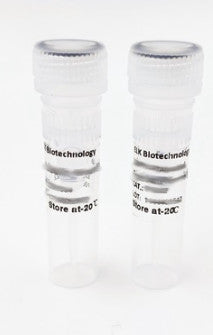
ELK Biotechnology
ERK 8 Rabbit Polyclonal Antibody - ES2300
ERK 8 Rabbit Polyclonal Antibody - ES2300
Couldn't load pickup availability
ERK 8 Rabbit Polyclonal Antibody
Sizes: 50μL, 100μL
Catalogue Numbers: ES2300-50, ES2300-100
Lead times: 1-2 weeks, if manufacturer has product in stock
Manufacturer/Ship Location: China
Background: catalytic activity:ATP + a protein = ADP + a phosphoprotein.,domain:The N-terminal region (1-20) is the minimal region necessary for ubiquitination and further proteosomal degradation.,domain:The TXY motif contains the threonine and tyrosine residues whose phosphorylation activates the MAP kinases.,enzyme regulation:Activated by threonine and tyrosine phosphorylation. Inhibited by dual specificity phosphatases, such as DUSP1.,function:In vitro, phosphorylates MBP.,PTM:Dually phosphorylated on Thr-175 and Tyr-177, which activates the enzyme. Autophosphorylated on threonine and tyrosine residues in vitro.,PTM:Ubiquitinated. Ubiquitination may allow its tight kinase activity regulation and rapid turnover. May be ubiquitinated by a SCF E3 ligase.,similarity:Belongs to the protein kinase superfamily. CMGC Ser/Thr protein kinase family. MAP kinase subfamily.,similarity:Contains 1 protein kinase domain.,subunit:Interacts with CSK/c-Src, ABL1, RET and TGFB1I1.,tissue specificity:Widely expressed with a maximal expression in lung and kidney.,
Reactivity: Human, Mouse
Host: Rabbit
Applications: WB, IHC, IF, ELISA
Alternate Names: MAPK15, ERK7, ERK8, Mitogen-activated protein kinase 15, MAP kinase 15, MAPK 15, Extracellular signal-regulated kinase 7, ERK-7, Extracellular signal-regulated kinase 8, ERK-8
Clonality: Polyclonal
Immunogen: The antiserum was produced against synthesized peptide derived from human MAPK15. AA range:141-190
Isotype: IgG
Target: ERK8
Specificity: ERK 8 Polyclonal Antibody detects endogenous levels of ERK 8 protein.
Dilution: Western Blot: 1/500 - 1/2000. Immunohistochemistry: 1/100 - 1/300. Immunofluorescence: 1/200 - 1/1000. ELISA: 1/10000. Not yet tested in other applications.
Purification: The antibody was affinity-purified from rabbit antiserum by affinity-chromatography using epitope-specific immunogen.
Concentration: 1 mg/ml,
Formlation: Liquid in PBS containing 50% glycerol, 0.5% BSA and 0.02% sodium azide.
Expression: Widely expressed with a maximal expression in lung and kidney,
Observed Band (KD): 60kD
Fields: IL-17 signaling pathway
Function: Catalytic Activity: ATP + a protein = ADP + a phosphoprotein
Domain: The N-terminal region (1-20) is the minimal region necessary for ubiquitination and further proteosomal degradation
Domain: The TXY motif contains the threonine and tyrosine residues whose phosphorylation activates the MAP kinases
Enzyme Regulation: Activated by threonine and tyrosine phosphorylation. Inhibited by dual specificity phosphatases, such as DUSP1
Function: In vitro, phosphorylates MBP
PTM: Dually phosphorylated on Thr-175 and Tyr-177, which activates the enzyme. Autophosphorylated on threonine and tyrosine residues in vitro
PTM: Ubiquitinated. Ubiquitination may allow its tight kinase activity regulation and rapid turnover. May be ubiquitinated by a SCF E3 ligase
Similarity: Belongs to the protein kinase superfamily. CMGC Ser/Thr protein kinase family. MAP kinase subfamily
Similarity: Contains 1 protein kinas
Subcellular Location: Cytoplasm, cytoskeleton, cilium basal body Cell junction, tight junction Cytoplasm, cytoskeleton, microtubule organizing center, centrosome, centriole Cytoplasmic vesicle, autophagosome Golgi apparatus Nucleus Cytoplasm Cytoplasm, cytoskeleton, spindle Co-localizes to the cytoplasm only in presence of ESRRA (PubMed:21190936) Translocates to the nucleus upon activation (PubMed:20638370) At prometaphase I, metaphase I (MI), anaphase I, telophase I, and metaphase II (MII) stages, is stably detected at the spindle (By similarity)
Storage and Stability: -20°C/1 year
Gene Name: MAPK15
Protein Name: Mitogen-activated protein kinase 15
Mouse Gene ID: 332110
Mouse SwissProt Number: Q80Y86
Research Use Only