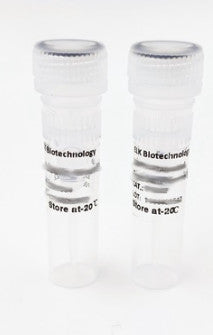
ELK Biotechnology
FTCD Rabbit Polyclonal Antibody - ES16313
FTCD Rabbit Polyclonal Antibody - ES16313
Couldn't load pickup availability
FTCD Rabbit Polyclonal Antibody
Sizes: 50μL, 100μL
Catalogue Numbers: ES16313-50, ES16313-100
Lead times: 1-2 weeks, if manufacturer has product in stock
Manufacturer/Ship Location: China
Background: The protein encoded by this gene is a bifunctional enzyme that channels 1-carbon units from formiminoglutamate, a metabolite of the histidine degradation pathway, to the folate pool. Mutations in this gene are associated with glutamate formiminotransferase deficiency. Alternatively spliced transcript variants have been found for this gene.[provided by RefSeq, Dec 2009],
Reactivity: Human, Mouse, Rat
Host: Rabbit
Applications: WB
Clonality: Polyclonal
Immunogen: Synthesized peptide derived from human FTCD AA range: 157-207
Isotype: IgG
Target: FTCD
Specificity: This antibody detects endogenous levels of FTCD at Human/Mouse/Rat
Dilution: WB 1:500-2000
Purification: The antibody was affinity-purified from rabbit serum by affinity-chromatography using specific immunogen.
Concentration: 1 mg/ml,
Formlation: Liquid in PBS containing 50% glycerol, 0.5% BSA and 0.02% sodium azide.
Molecular Weight (Da): 60kD
Fields: Histidine metabolism, One carbon pool by folate, Metabolic pathways
Function: Catalytic Activity: 5-formimidoyltetrahydrofolate + L-glutamate = tetrahydrofolate + N-formimidoyl-L-glutamate
Catalytic Activity: 5-formimidoyltetrahydrofolate = 5,10-methenyltetrahydrofolate + NH(3)
Catalytic Activity: 5-formyltetrahydrofolate + L-glutamate = tetrahydrofolate + N-formyl-L-glutamate
Cofactor: Pyridoxal phosphate
Disease: Defects in FTCD are the cause of glutamate formiminotransferase deficiency [MIM: 229100], also known as formiminoglutamicaciduria (FIGLU-uria). It is an autosomal recessive disorder. Features of a severe phenotype, include elevated levels of formiminoglutamate (FIGLU) in the urine in response to histidine administration, megaloblastic anemia, and mental retardation. Features of a mild phenotype include high urinary excretion of FIGLU in the absence of histidine administration, mild developmental delay, and no hematological abnormalities
Function: Folate-d
Subcellular Location: Cytoplasm, cytosol Golgi apparatus Cytoplasm, cytoskeleton, microtubule organizing center, centrosome, centriole More abundantly located around the mother centriole
Storage and Stability: -20°C/1 year
Gene Name: FTCD
Protein Name: FTCD
Mouse Gene ID: 14317
Mouse SwissProt Number: Q91XD4
Rat Gene ID: 89833
Rat SwissProt Number: O88618
Research Use Only