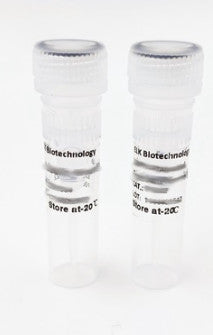
ELK Biotechnology
LAT Rabbit Polyclonal Antibody - ES2702
LAT Rabbit Polyclonal Antibody - ES2702
Couldn't load pickup availability
LAT Rabbit Polyclonal Antibody
Sizes: 50μL, 100μL
Catalogue Numbers: ES2702-50, ES2702-100
Lead times: 1-2 weeks, if manufacturer has product in stock
Manufacturer/Ship Location: China
Background: The protein encoded by this gene is phosphorylated by ZAP-70/Syk protein tyrosine kinases following activation of the T-cell antigen receptor (TCR) signal transduction pathway. This transmembrane protein localizes to lipid rafts and acts as a docking site for SH2 domain-containing proteins. Upon phosphorylation, this protein recruits multiple adaptor proteins and downstream signaling molecules into multimolecular signaling complexes located near the site of TCR engagement. Alternative splicing results in multiple transcript variants encoding different isoforms. [provided by RefSeq, Jul 2008],
Reactivity: Human, Mouse, Rat
Host: Rabbit
Applications: WB, ELISA, IHC
Alternate Names: LAT, Linker for activation of T-cells family member 1, 36 kDa phospho-tyrosine adapter protein, pp36, p36-38
Clonality: Polyclonal
Immunogen: The antiserum was produced against synthesized peptide derived from human LAT. AA range:171-220
Isotype: IgG
Target: LAT
Specificity: LAT Polyclonal Antibody detects endogenous levels of LAT protein.
Dilution: WB 1:500-2000, IHC-p 1:50-300, ELISA 2000-20000
Purification: The antibody was affinity-purified from rabbit antiserum by affinity-chromatography using epitope-specific immunogen.
Concentration: 1 mg/ml,
Formlation: Liquid in PBS containing 50% glycerol, 0.5% BSA and 0.02% sodium azide.
Expression: Expressed in thymus, T-cells, NK cells, mast cells and, at lower levels, in spleen, Present in T-cells but not B-cells (at protein level),
Observed Band (KD): 38kD
Fields: Ras signaling pathway, Rap1 signaling pathway, NF-kappa B signaling pathway, Natural killer cell mediated cytotoxicity, Th1 and Th2 cell differentiation, Th17 cell differentiation, T cell receptor signaling pathway, Fc epsilon RI signaling pathway, Fc gamma R-mediated phagocytosis, Yersinia infection, PD-L1 expression and PD-1 checkpoint pathway in cancer
Function: Function: Required for TCR (T-cell antigen receptor)- and pre-TCR-mediated signaling, both in mature T-cells and during their development. Involved in FCGR3 (low affinity immunoglobulin gamma Fc region receptor III)-mediated signaling in natural killer cells and FCER1 (high affinity immunoglobulin epsilon receptor)-mediated signaling in mast cells. Couples activation of these receptors and their associated kinases with distal intracellular events such as mobilization of intracellular calcium stores, PKC activation, MAPK activation or cytoskeletal reorganization through the recruitment of PLCG1, GRB2, GRAP2, and other signaling molecules
Miscellaneous: Engagement of killer inhibitory receptors (KIR) disrupts the interaction of PLCG1 with LAT and blocks target cell-induced activation of PLC, maybe by inducing the dephosphorylation of LAT
PTM: Palmitoylation of Cys-26 and Cys-29 is required
Subcellular Location: Cell membrane, Single-pass type III membrane protein Present in lipid rafts
Storage and Stability: -20°C/1 year
Gene Name: LAT
Protein Name: Linker for activation of T-cells family member 1
Mouse Gene ID: 16797
Mouse SwissProt Number: O54957
Rat Gene ID: 81511
Rat SwissProt Number: O70601
Research Use Only