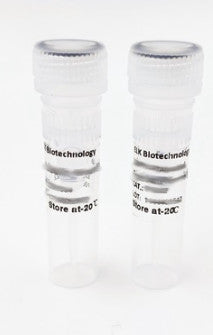
ELK Biotechnology
LRAT Rabbit Polyclonal Antibody - ES2724
LRAT Rabbit Polyclonal Antibody - ES2724
Couldn't load pickup availability
LRAT Rabbit Polyclonal Antibody
Sizes: 50μL, 100μL
Catalogue Numbers: ES2724-50, ES2724-100
Lead times: 1-2 weeks, if manufacturer has product in stock
Manufacturer/Ship Location: China
Background: lecithin retinol acyltransferase (phosphatidylcholine--retinol O-acyltransferase)(LRAT) Homo sapiens The protein encoded by this gene localizes to the endoplasmic reticulum, where it catalyzes the esterification of all-trans-retinol into all-trans-retinyl ester. This reaction is an important step in vitamin A metabolism in the visual system. Mutations in this gene have been associated with early-onset severe retinal dystrophy and Leber congenital amaurosis 14. Alternative splicing results in multiple transcript variants. [provided by RefSeq, Aug 2014],
Reactivity: Human, Mouse, Rat
Host: Rabbit
Applications: WB, IHC, IF, ELISA
Alternate Names: LRAT, Lecithin retinol acyltransferase, Phosphatidylcholine--retinol O-acyltransferase
Clonality: Polyclonal
Immunogen: The antiserum was produced against synthesized peptide derived from human LRAT. AA range:111-160
Isotype: IgG
Target: LRAT
Specificity: LRAT Polyclonal Antibody detects endogenous levels of LRAT protein.
Dilution: Western Blot: 1/500 - 1/2000. Immunohistochemistry: 1/100 - 1/300. Immunofluorescence: 1/200 - 1/1000. ELISA: 1/10000. Not yet tested in other applications.
Purification: The antibody was affinity-purified from rabbit antiserum by affinity-chromatography using epitope-specific immunogen.
Concentration: 1 mg/ml,
Formlation: Liquid in PBS containing 50% glycerol, 0.5% BSA and 0.02% sodium azide.
Expression: Hepatic stellate cells and endothelial cells (at protein level), Found at high levels in testis and liver, followed by retinal pigment epithelium, small intestine, prostate, pancreas and colon, Low expression observed in brain, In fetal tissues, expressed in retinal pigment epithelium and liver, and barely in the brain,
Observed Band (KD): 27kD
Fields: Retinol metabolism, Metabolic pathways, Vitamin digestion and absorption
Function: Catalytic Activity: Phosphatidylcholine + retinol--[cellular-retinol-binding-protein] = 2-acylglycerophosphocholine + retinyl-ester--[cellular-retinol-binding-protein]
Disease: Defects in LRAT are a cause of severe early-onset retinal dystrophy (RD) [MIM: 604863]
Enzyme Regulation: Inhibited by all-trans-retinyl alpha-bromoacetate and N-boc-L-biocytinyl-11-aminoundecane chloro-methyl ketone (BACMK)
Function: Transfers the acyl group from the sn-1 position of phosphatidylcholine to all-trans retinol, producing all-trans retinyl esters. Retinyl esters are storage forms of vitamin A. LRAT plays a critical role in vision. It provides the all-trans retinyl ester substrates for the isomerohydrolase which processes the esters into 11-cis-retinol in the retinal pigment epithelium, due to a membrane-associated alcohol dehydrogenase, 11 cis-retinol is oxidized and converted into 11-cis-retinaldehyde
Subcellular Location: Endoplasmic reticulum membrane, Single-pass membrane protein Rough endoplasmic reticulum Endosome, multivesicular body Cytoplasm, perinuclear region Present in the rough endoplasmic reticulum and multivesicular body in hepatic stellate cells Present in the rough endoplasmic reticulum and perinuclear region in endothelial cells (By similarity)
Storage and Stability: -20°C/1 year
Gene Name: LRAT
Protein Name: Lecithin retinol acyltransferase
Mouse Gene ID: 79235
Mouse SwissProt Number: Q9JI60
Rat Gene ID: 64047
Rat SwissProt Number: Q9JI61
Research Use Only