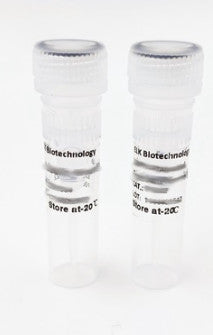
ELK Biotechnology
PKC δ (phospho Thr507) Rabbit Polyclonal Antibody - ES6772
PKC δ (phospho Thr507) Rabbit Polyclonal Antibody - ES6772
Couldn't load pickup availability
PKC δ (phospho Thr507) Rabbit Polyclonal Antibody
Sizes: 50μL, 100μL
Catalogue Numbers: ES6772-50, ES6772-100
Lead times: 1-2 weeks, if manufacturer has product in stock
Manufacturer/Ship Location: China
Background: Protein kinase C (PKC) is a family of serine- and threonine-specific protein kinases that can be activated by calcium and the second messenger diacylglycerol. PKC family members phosphorylate a wide variety of protein targets and are known to be involved in diverse cellular signaling pathways. PKC family members also serve as major receptors for phorbol esters, a class of tumor promoters. Each member of the PKC family has a specific expression profile and is believed to play distinct roles in cells. The protein encoded by this gene is one of the PKC family members. Studies both in human and mice demonstrate that this kinase is involved in B cell signaling and in the regulation of growth, apoptosis, and differentiation of a variety of cell types. Alternatively spliced transcript variants encoding the same protein have been observed. [provided by RefSeq, Jul 2008],
Reactivity: Human, Mouse, Rat
Host: Rabbit
Applications: WB, IHC, IF, ELISA
Alternate Names: PRKCD, Protein kinase C delta type, Tyrosine-protein kinase PRKCD, nPKC-delta
Clonality: Polyclonal
Immunogen: The antiserum was produced against synthesized peptide derived from human PKC delta around the phosphorylation site of Thr505. AA range:471-520
Isotype: IgG
Target: PKC δ
Specificity: Phospho-PKC δ (T507) Polyclonal Antibody detects endogenous levels of PKC δ protein only when phosphorylated at T507.
Dilution: Western Blot: 1/500 - 1/2000. Immunohistochemistry: 1/100 - 1/300. ELISA: 1/20000. Not yet tested in other applications.
Purification: The antibody was affinity-purified from rabbit antiserum by affinity-chromatography using epitope-specific immunogen.
Concentration: 1 mg/ml,
Formlation: Liquid in PBS containing 50% glycerol, 0.5% BSA and 0.02% sodium azide.
Expression: Epithelium, Hippocampus, Liver, Platelet, Skin,
Observed Band (KD): 78kD
Fields: Chemokine signaling pathway, Autophagy - animal, Vascular smooth muscle contraction, NOD-like receptor signaling pathway, C-type lectin receptor signaling pathway, Fc gamma R-mediated phagocytosis, Neurotrophin signaling pathway, Inflammatory mediator regulation of TRP channels, GnRH signaling pathway, Estrogen signaling pathway, Type II diabetes mellitus, Insulin resistance, AGE-RAGE signaling pathway in diabetic complications, Prion disease, Shigellosis, Chemical carcinogenesis - reactive oxygen species, Diabetic cardiomyopathy
Function: Catalytic Activity: ATP + a protein = ADP + a phosphoprotein
Domain: The C1 domain, containing the phorbol ester/DAG-type region 1 (C1A) and 2 (C1B), is the diacylglycerol sensor
Domain: The C2 domain is a non-calcium binding domain. It binds proteins containing phosphotyrosine in a sequence-specific manner
Enzyme Regulation: Three specific sites, Thr-507 (activation loop of the kinase domain), Ser-645 (turn motif) and Ser-664 (hydrophobic region), need to be phosphorylated for its full activation
Function: This is calcium-independent, phospholipid-dependent, serine- and threonine-specific enzyme. PKC is activated by diacylglycerol which in turn phosphorylates a range of cellular proteins. PKC also serves as the receptor for phorbol esters, a class of tumor promoters. May play a role in antigen-dependent control of B-cell function. Phosphorylates MUC1 in the C-terminal and regulates the i
Subcellular Location: Cytoplasm Cytoplasm, perinuclear region Nucleus Cell membrane, Peripheral membrane protein Mitochondrion Endomembrane system Translocates to the mitochondria upon apoptotic stimulation Upon activation, translocates to the plasma membrane followed by partial location to the endolysosomes (PubMed:17303575)
Storage and Stability: -20°C/1 year
Gene Name: PRKCD
Protein Name: Protein kinase C delta type
Mouse Gene ID: 18753
Mouse SwissProt Number: P28867
Rat Gene ID: 170538
Rat SwissProt Number: P09215
Research Use Only