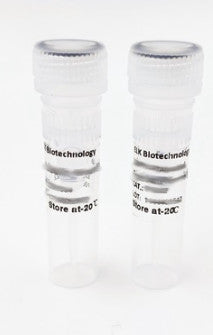
ELK Biotechnology
PUMA Rabbit Polyclonal Antibody - ES3285
PUMA Rabbit Polyclonal Antibody - ES3285
Couldn't load pickup availability
PUMA Rabbit Polyclonal Antibody
Sizes: 50μL, 100μL
Catalogue Numbers: ES3285-50, ES3285-100
Lead times: 1-2 weeks, if manufacturer has product in stock
Manufacturer/Ship Location: China
Background: This gene encodes a member of the BCL-2 family of proteins. This family member belongs to the BH3-only pro-apoptotic subclass. The protein cooperates with direct activator proteins to induce mitochondrial outer membrane permeabilization and apoptosis. It can bind to anti-apoptotic Bcl-2 family members to induce mitochondrial dysfunction and caspase activation. Because of its pro-apoptotic role, this gene is a potential drug target for cancer therapy and for tissue injury. Alternative splicing results in multiple transcript variants. [provided by RefSeq, Dec 2011],
Reactivity: Human, Mouse, Rat
Host: Rabbit
Applications: WB IF, ELISA
Alternate Names: BBC3, PUMA, Bcl-2-binding component 3, JFY-1, p53 up-regulated modulator of apoptosis
Clonality: Polyclonal
Immunogen: The antiserum was produced against synthesized peptide derived from human PUMA. AA range:120-169
Isotype: IgG
Target: PUMA
Specificity: PUMA Polyclonal Antibody detects endogenous levels of PUMA protein.
Dilution: WB 1:500-2000 IF 1:100-300 ELISA 1:5000-20000 Not yet tested in other applications.
Purification: The antibody was affinity-purified from rabbit antiserum by affinity-chromatography using epitope-specific immunogen.
Concentration: 1 mg/ml,
Formlation: Liquid in PBS containing 50% glycerol, 0.5% BSA and 0.02% sodium azide.
Expression: Ubiquitously expressed,
Observed Band (KD): 23kD
Fields: Platinum drug resistance, p53 signaling pathway, Apoptosis, Apoptosis - multiple species, Hippo signaling pathway, Huntington disease, Measles, Pathways in cancer, Colorectal cancer
Function: Function: Essential mediator of p53-dependent and p53-independent apoptosis
Induction: By DNA damage, glucocorticoid treatment, growth factor deprivation and p53
Similarity: Belongs to the Bcl-2 family
Subcellular Location: Localized to the mitochondria in order to induce cytochrome c release
Subunit: Interacts with MCL1 and BCL2A1 (By similarity). Interacts with BCL2 and BCL2L1/BCL-XL
Tissue Specificity: Ubiquitously expressed
Subcellular Location: Mitochondrion Localized to the mitochondria in order to induce cytochrome c release
Storage and Stability: -20°C/1 year
Gene Name: BBC3
Protein Name: Bcl-2-binding component 3
Mouse Gene ID: 170770
Mouse SwissProt Number: Q99ML1
Rat Gene ID: 317673
Rat SwissProt Number: Q80ZG6
Research Use Only