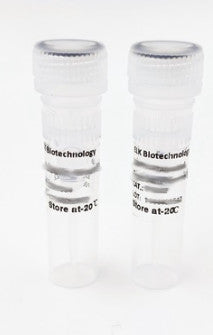
ELK Biotechnology
SARDH Rabbit Polyclonal Antibody - ES13199
SARDH Rabbit Polyclonal Antibody - ES13199
Couldn't load pickup availability
SARDH Rabbit Polyclonal Antibody
Sizes: 50μL, 100μL
Catalogue Numbers: ES13199-50, ES13199-100
Lead times: 1-2 weeks, if manufacturer has product in stock
Manufacturer/Ship Location: China
Background: This gene encodes an enzyme localized to the mitochondrial matrix which catalyzes the oxidative demethylation of sarcosine. This enzyme is distinct from another mitochondrial matrix enzyme, dimethylglycine dehydrogenase, which catalyzes a reaction resulting in the formation of sarcosine. Mutations in this gene are associated with sarcosinemia. Alternatively spliced transcript variants have been described. [provided by RefSeq, Oct 2008],
Reactivity: Human, Mouse, Rat
Host: Rabbit
Applications: WB, ELISA, IHC
Clonality: Polyclonal
Immunogen: Synthesized peptide derived from human SARDH AA range: 279-329
Isotype: IgG
Target: SARDH
Specificity: This antibody detects endogenous levels of SARDH at Human/Mouse/Rat
Dilution: WB 1:500-2000, IHC-p 1:50-300, ELISA 2000-20000
Purification: The antibody was affinity-purified from rabbit serum by affinity-chromatography using specific immunogen.
Concentration: 1 mg/ml,
Formlation: Liquid in PBS containing 50% glycerol, 0.5% BSA and 0.02% sodium azide.
Expression: Expressed in pancreas, liver and kidney,
Molecular Weight (Da): 101kD
Fields: Glycine, serine and threonine metabolism, Metabolic pathways
Function: Catalytic Activity: Sarcosine + acceptor + H(2)O = glycine + formaldehyde + reduced acceptor
Cofactor: Binds 1 FAD covalently per monomer
Disease: Defects in SARDH are a ause of sarcosinemia [MIM: 268900]. Sarcosinemia is a metabolic disorder characterized by an increased concentration of sarcosine in plasma and urine due to sarcosine dehydrogenase deficiency. Prevalence has been estimated at 1: 28'000 to 1: 350'000 in newborn screening programs. Sarcosinemia is most probably a benign condition without significant clinical problems. It is transmitted in an autosomal recessive manner
Pathway: Amine and polyamine degradation, sarcosine degradation, formaldehyde and glycine from sarcosine: step 1/1
Similarity: Belongs to the gcvT family
Subcellular Location: Mitochondrion matrix
Storage and Stability: -20°C/1 year
Gene Name: SARDH DMGDHL1
Protein Name: SARDH
Mouse Gene ID: 192166
Mouse SwissProt Number: Q99LB7
Rat Gene ID: 114123
Rat SwissProt Number: Q64380
Research Use Only