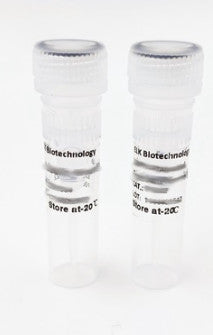
ELK Biotechnology
TBC1D4 (phospho Thr642) Rabbit Polyclonal Antibody - ES8119
TBC1D4 (phospho Thr642) Rabbit Polyclonal Antibody - ES8119
Couldn't load pickup availability
TBC1D4 (phospho Thr642) Rabbit Polyclonal Antibody
Sizes: 50μL, 100μL
Catalogue Numbers: ES8119-50, ES8119-100
Lead times: 1-2 weeks, if manufacturer has product in stock
Manufacturer/Ship Location: China
Background: This gene is a member of the Tre-2/BUB2/CDC16 domain family. The protein encoded by this gene is a Rab-GTPase-activating protein, and contains two phopshotyrosine-binding domains (PTB1 and PTB2), a calmodulin-binding domain (CBD), a Rab-GTPase domain, and multiple AKT phosphomotifs. This protein is thought to play an important role in glucose homeostasis by regulating the insulin-dependent trafficking of the glucose transporter 4 (GLUT4), important for removing glucose from the bloodstream into skeletal muscle and fat tissues. Reduced expression of this gene results in an increase in GLUT4 levels at the plasma membrane, suggesting that this protein is important in intracellular retention of GLUT4 under basal conditions. When exposed to insulin, this protein is phosphorylated, dissociates from GLUT4 vesicles, resulting in increased GLUT4 at the cell surface, and enhanced glucose transport. Ph
Reactivity: Human, Mouse
Host: Rabbit
Applications: WB, IHC, IF, ELISA
Alternate Names: TBC1D4, AS160, KIAA0603, TBC1 domain family member 4, Akt substrate of 160 kDa, AS160
Clonality: Polyclonal
Immunogen: The antiserum was produced against synthesized peptide derived from human AS160 around the phosphorylation site of Thr642. AA range:611-660
Isotype: IgG
Target: TBC1D4
Specificity: Phospho-TBC1D4 (T642) Polyclonal Antibody detects endogenous levels of TBC1D4 protein only when phosphorylated at T642.
Dilution: Immunohistochemistry: 1/100 - 1/300. Immunofluorescence: 1/200 - 1/1000. ELISA: 1/5000. Not yet tested in other applications.
Purification: The antibody was affinity-purified from rabbit antiserum by affinity-chromatography using epitope-specific immunogen.
Concentration: 1 mg/ml,
Formlation: Liquid in PBS containing 50% glycerol, 0.5% BSA and 0.02% sodium azide.
Expression: Widely expressed, Isoform 2 is the highest overexpressed in most tissues, Isoform 1 is highly expressed in skeletal muscle and heart, but was not detectable in the liver nor in adipose tissue, Isoform 2 is strongly expressed in adrenal and thyroid gland, and also in lung, kidney, colon, brain and adipose tissue, Isoform 2 is moderately expressed in skeletal muscle, Expressed in pancreatic Langerhans islets, including beta cells (at protein level), Expression is decreased by twofold in pancreatic islets in type 2 diabetes patients compared to control subjects, Up-regulated in T-cells from patients with atopic dermatitis,
Observed Band (KD): 150kD
Fields: Thyroid hormone signaling pathway, Insulin resistance, Diabetic cardiomyopathy
Function: Disease: May be involved in atopic dermatitis (AD)
Function: May act as a GTPase-activating protein for RAB2A, RAB8A, RAB10 and RAB14. Isoform 2 promotes insulin-induced glucose transporter SLC2A4/GLUT4 translocation at the plasma membrane, thus increasing glucose uptake
PTM: Insulin-stimulated phosphorylation is required for SLC2A4/GLUT4 translocation
PTM: Phosphorylated by AKT1, insulin-induced
PTM: Physiological hyperinsulinemia increases phosphorylation in skeletal muscle. Insulin-stimulated phosphorylation is reduced by 39% in type 2 diabetic patients
Similarity: Contains 1 Rab-GAP TBC domain
Similarity: Contains 2 PID domains
Subcellular Location: Isoform 2 shows a cytoplasmic perinuclear localization in a myoblastic cell line in resting and insulin-stimulated cells
Tissue Specificity: Widely expressed, but differential expression for isoforms 1 and 2, with highest overall expressio
Subcellular Location: Cytoplasm Isoform 2 shows a cytoplasmic perinuclear localization in a myoblastic cell line in resting and insulin-stimulated cells
Storage and Stability: -20°C/1 year
Gene Name: TBC1D4
Protein Name: TBC1 domain family member 4
Mouse Gene ID: 210789
Mouse SwissProt Number: Q8BYJ6
Research Use Only