

Idylle
MucinGel - Mucus Mimicking Biomaterial - IDY-MG
MucinGel - Mucus Mimicking Biomaterial - IDY-MG
Couldn't load pickup availability
Soft biomimetic gel used as a reliable mucus replicate
Sizes:
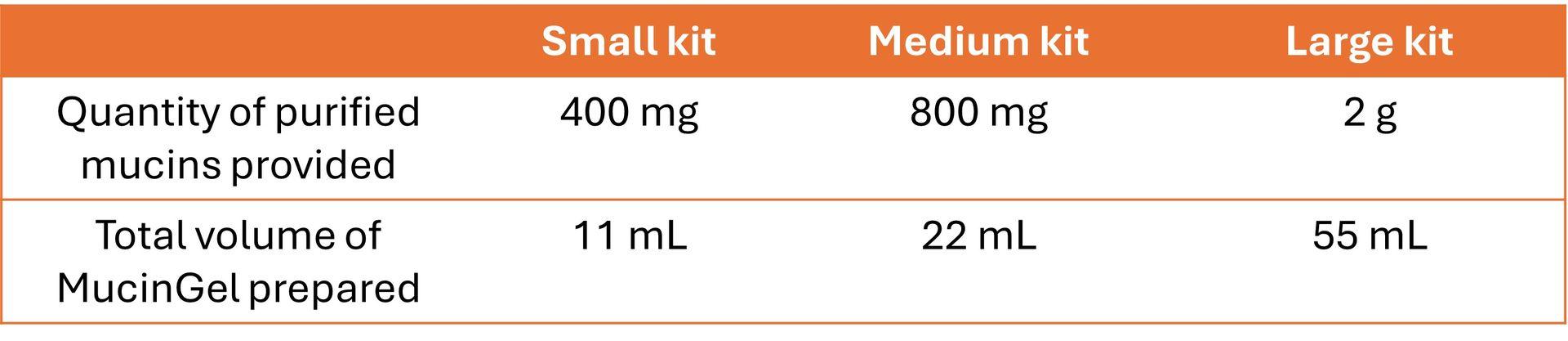
11ml (IDY-MG-10)
Catalogue Numbers:
IDY-MG-10 (11ml)
IDY-MG-20 (22ml)
IDY-MG-15 (55ml)
MucinGel is a new type of biomimetic gel replicating natural mucus. Composed of high-purity mucins gellified using a natural cross-linker, this material can be integrated as a reliable mucus surrogate in cell-based models or serve as a reproducible standard to calibrate, measure and monitor physico-chemical parameter changes of mucus.
Closer to native mucus
Preserved glycosylation pattern and status, disulfide bonds, selective biofilm formation and tunable viscoelasticity to replicate biophysical variations found in nature
Well-defined formulation
Composed of highly-pure mucins Type III cross-linked with a natural compound. Nothing else!
Perfect reproducibility
With a consistent composition and physico-chemical properties between batches, MucinGel can serve as a reliable mucus-like standard in biological and pharmaceutical assays where reproducibility is key
Compatible with a wide variety of supports
Thanks to its viscoelastic nature and high spreadability, MucinGel can be easily applied to solid surfaces (glass, plastic), porous transwell membranes or integrated within hydrogels
What is MucinGel made of?
MucinGel is composed of pure type III mucins, obtained using a thoroughly-optimized isolation process from porcine stomach. These mucins are cross-linked with genipin, a naturally derived cross-linker binding to primary amine groups of the mucin glycoproteins. The use of genipin as a cross-linker in biomaterials has been extensively documented in due to its low toxicity and biocompatibility,
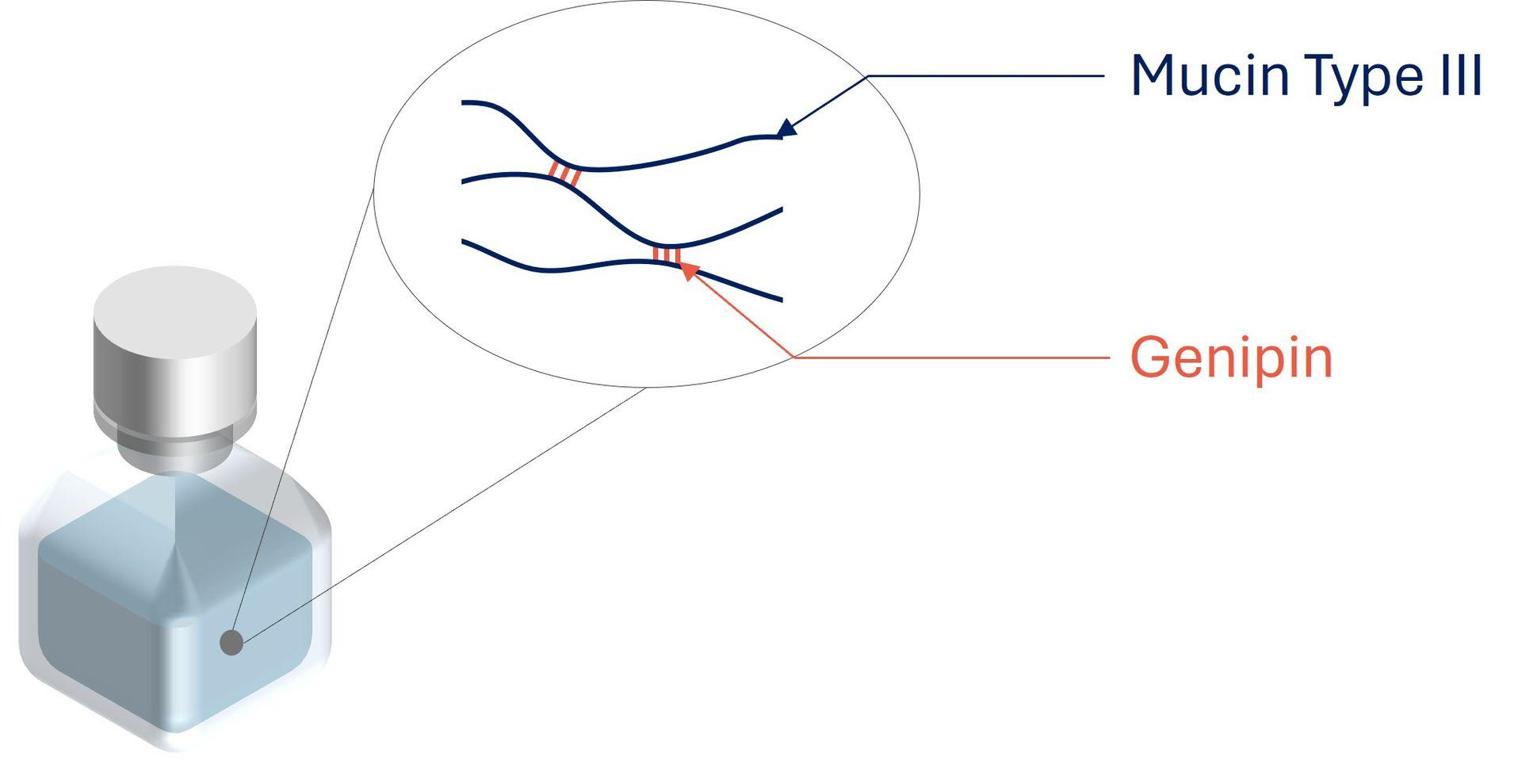
A reliable replicate of native mucus
This cross-linking process results in a soft gel, more representative of the native mucus compared to PEG-based hydrogels which often relies on non-selective or purely physical gelation. The genipin-mucin reticulation mechanism, similar to that of chitosan and proteins, preserves physiological glycosylation pattern and status, as well as disulfide bonds as none of these features are involved in the crosslinking process.
Thanks to its highly-tunable elasticity, MucinGel can be used to replicate dynamic and responsive behavior of mucus in various physiological environments (i.e. pharynx, lung, intestine, etc).
MucinGel has been shown to replicate natural selectivity of bacteria towards mucus in a biofilm formation assay.
Consistent physico-chemical properties
Because you know what you're working with, you can precisely control the resulting physico-chemical parameters (i.e. thickness, mechanical strength, etc) of the obtained mucus-like material and make sure you reproduce it perfectly in future experiments. A standard of choice to use in a variety of assays where reproducibility is key:
- As a physiological mucus-like layer to integrate in cell-based mucosal models
- As a calibration tool to test individual parameters and set up robust experiments
- As a reliable standard for drug screening or safety/toxicology assessment
- As a mucus-based bioink for 3D bioprinting and tissue engineering
The MucinGel physical and mechanical properties obtained according to the genipin:mucin ratio used for cross-linking and the coating process have been thoroughly characterized by UV/Vis & FTIR spectroscopy, dynamic light scattering, oscillatory rheological studies and SEM/Cryo-SEM imaging.
Additional documents
Kit contents
- Purified Type III mucins, lyophilized
- Genipin cross-linker, lyophilized
Not included with the kit:
- Milli-Q water
- Absolute ethanol (molecular grade)
Storage instructions
Dry mucin and genipin can be stored at room temperature for one year.
Once rehydrated, the genipin solution can be stored at room temperature for one year.
The required amount of mucin should be rehydrated just before each experiment. If not used immediately, store at 4°C and use within a day.
Results
Cryo-EM imaging of MucinGel microstructure reveals heterogeneous mesh-like organization resembling native mucus
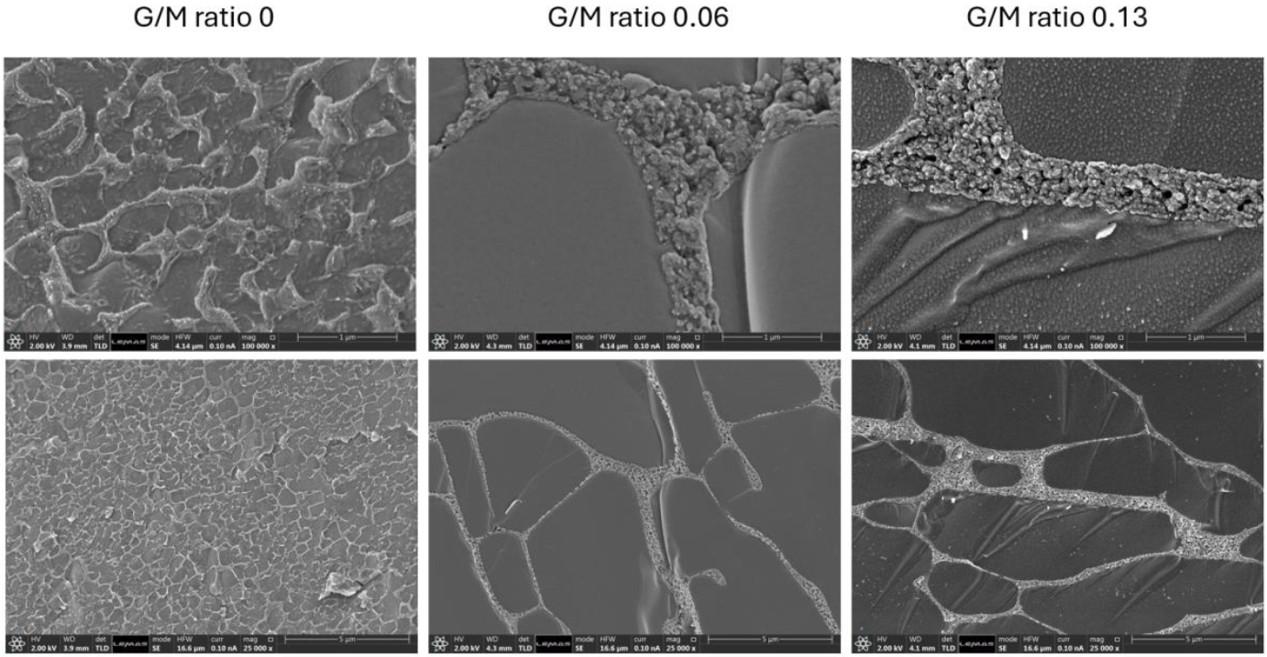
Cryo-SEM images of MucinGel crosslinked at genipin:mucin (G/M) ratios of 0, 0.06 and 0.13 (scale bars = 1 μm (top), and 5 μm (bottom).
Source publication: Collado-Gonzalez M. et al, 2025
Transwell insert porous membrane coated with MucinGel
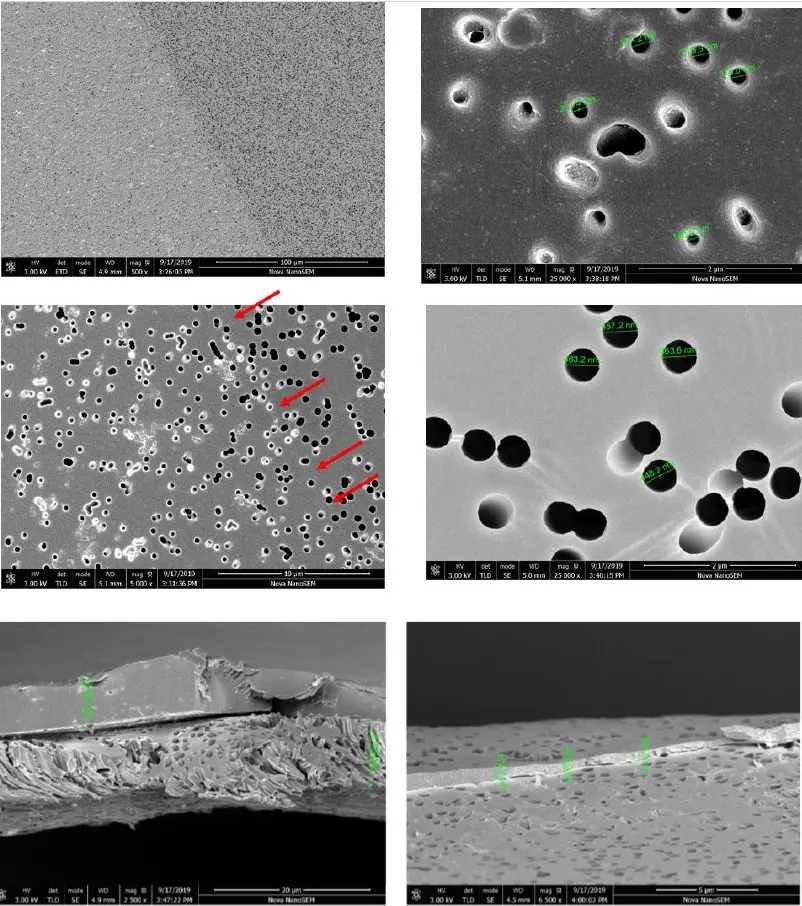
SEM images of genipin-crosslinked mucin at G/M ratio 0.08 spin coated on a half of a polycarbonate membrane (top left). Detail of the border of the gel on the membrane is pointed by arrows (middle left). Pores covered by mucin gel (top right) or uncovered (middle right). Detail on the transversal sections in the outer border of the membrane (bottom left) and the centre of the membrane (bottom right).
Source publication: Collado-González M. et al, 2025
MucinGel replicates natural growth selectivity of mucin-dwelling bacteria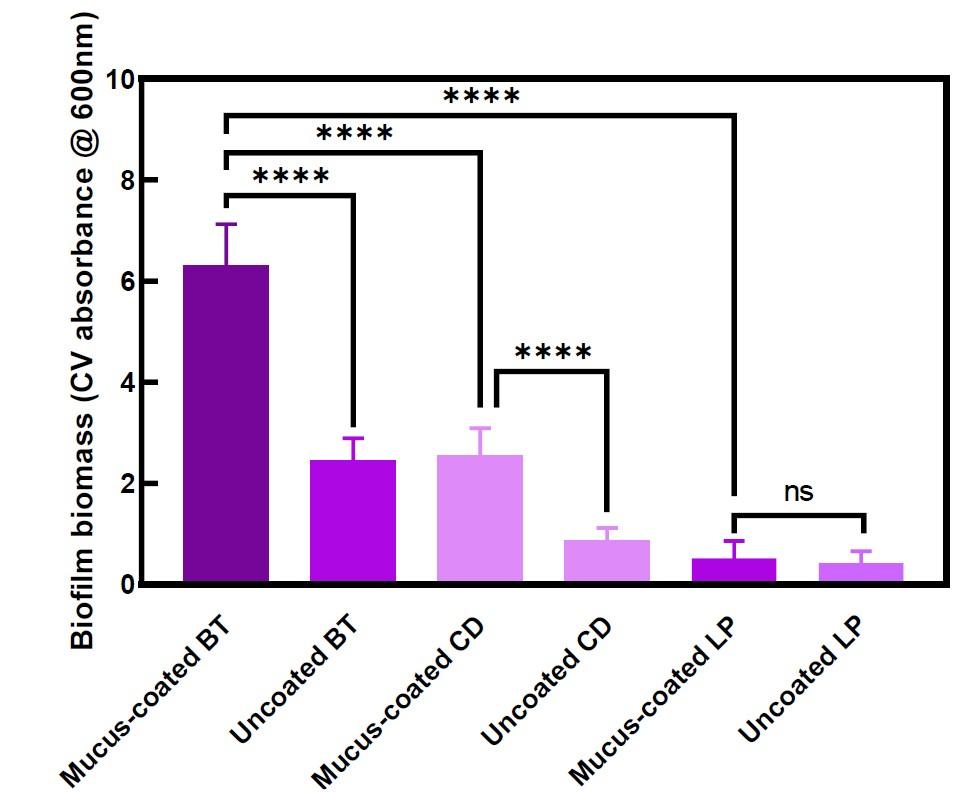
Two mucin-binding bacterial strains, Bacteroides thetaiotaomicron (BT) and Clostridioides difficile (CD), and one non-binding bacterial strain, Lactobacillus paracasei (LP) were grown on either mucin-coated or uncoated coverslips and the biofilm formed measured. Results shown are mean ± standard error of the mean calculated from 3 independent biological replicates with 12 technical replicates each (****: p ≤ 0.0001).
Source publication: Collado-González M. et al, 2025
SEM images of spin-coated MucinGel films show coherent sheets with a rough topology
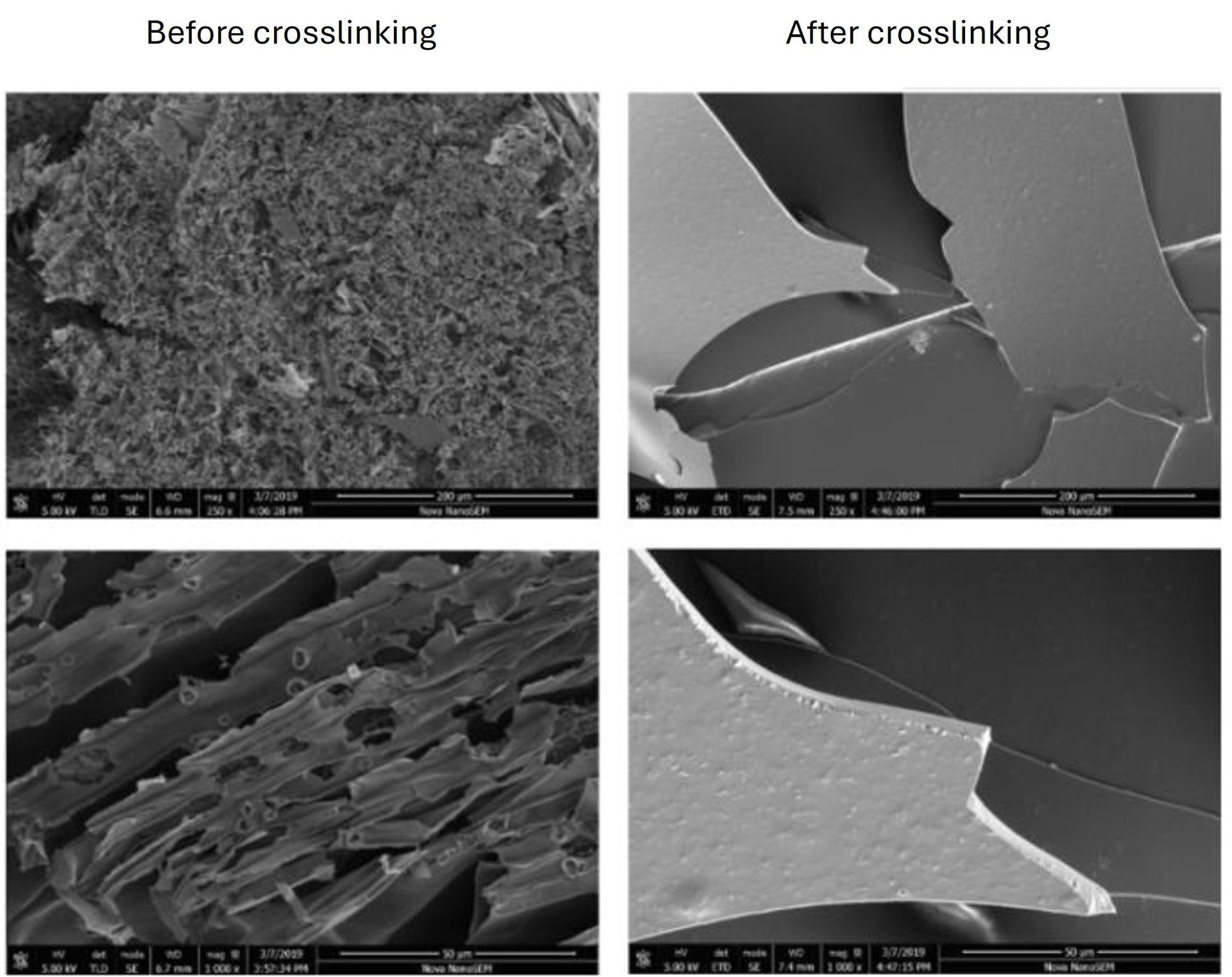
SEM images of spin-coated uncrosslinked (left panels) and genipin crosslinked MucinGel (right panels) (top row, scale bar = 200 μm, lower row, scale bar = 50 μm). Genipin crosslinking results in the formation of large sheets with a slightly rough topology, arranged in a single layer.
Source publication: Collado-Gonzalez M. et al, 2025
