Idylle
SensiDeath - Ultra Sensitive Human Cell Death Assay
SensiDeath - Ultra Sensitive Human Cell Death Assay
Couldn't load pickup availability
Ultra-sensitive PCR-based human cell death assay
SensiDeath is a novel sensitive kit for human cell death detection. Taking benefit from qPCR high sensitivity, SensiDeath provides a simple method to detect cell death at its earliest stages by quantifying genomic DNA fragments released in the cytoplasm. Use it to get reliable measurements of apoptosis across a range of cell populations.
Catalogue Numbers:
IDY-SD-300 (Primer mix (20X): 300µL, SensiDeath Lysis buffer (6X): 25 mL)
Sizes:
Primer mix (20X): 300µL, SensiDeath Lysis buffer (6X): 25 mL (IDY-SD-300)
Fast & simple
As simple as a qPCR. Lyse your cells, collect the cytosolic fraction and get results in less than 2h!
Extended dynamic range
Get reliable data and make sure to never miss out subtle changes in cell death.
Scalable
Compatible with 96-well plate format and efficient on small cell populations, SensiDeath is a convenient method for high-throughput cytotoxicity assays.
Early detection
Based on extremely sensitive cytosolic detection of genomic DNA, SensiDeath detects cell death as soon as it is initiated and up to its late phase.
How does SensiDeath work?
SensiDeath is based on a patented technology relying on the quantitation of genomic DNA released in the cell cytosol, a key process initiated upon cell death and a valuable marker of apoptosis. By amplifying genomic DNA present in isolated cytosolic fractions, you can quickly compare relative levels of apoptotic cells across a wide range of samples.
Steps:
- Lyse your sample using the special lysis buffer disrupting cell plasma membrane specifically.
- Centrifuge your lysate to recover the cytosolic fraction.
- Amplify specific sequences present in the genome by quantitative PCR using our optimized primers.
- Assess cell death that is directly proportional to cytosolic enrichment in genomic DNA.
Applications of SensiDeath
Outputs: comparative measurements of cell death levels for cytotoxic or viability assays. SensiDeath can be used as a reliable method to distinguish changes in apoptosis*.
*Check out our Results section for detailed results.
Sample types: human cells (adherent & suspension)*, tumoroids
*Check out the FAQ section for a full list of validated cell lines.
Analysis: PCR-based techniques (quantitative PCR, digital droplet PCR).
Results
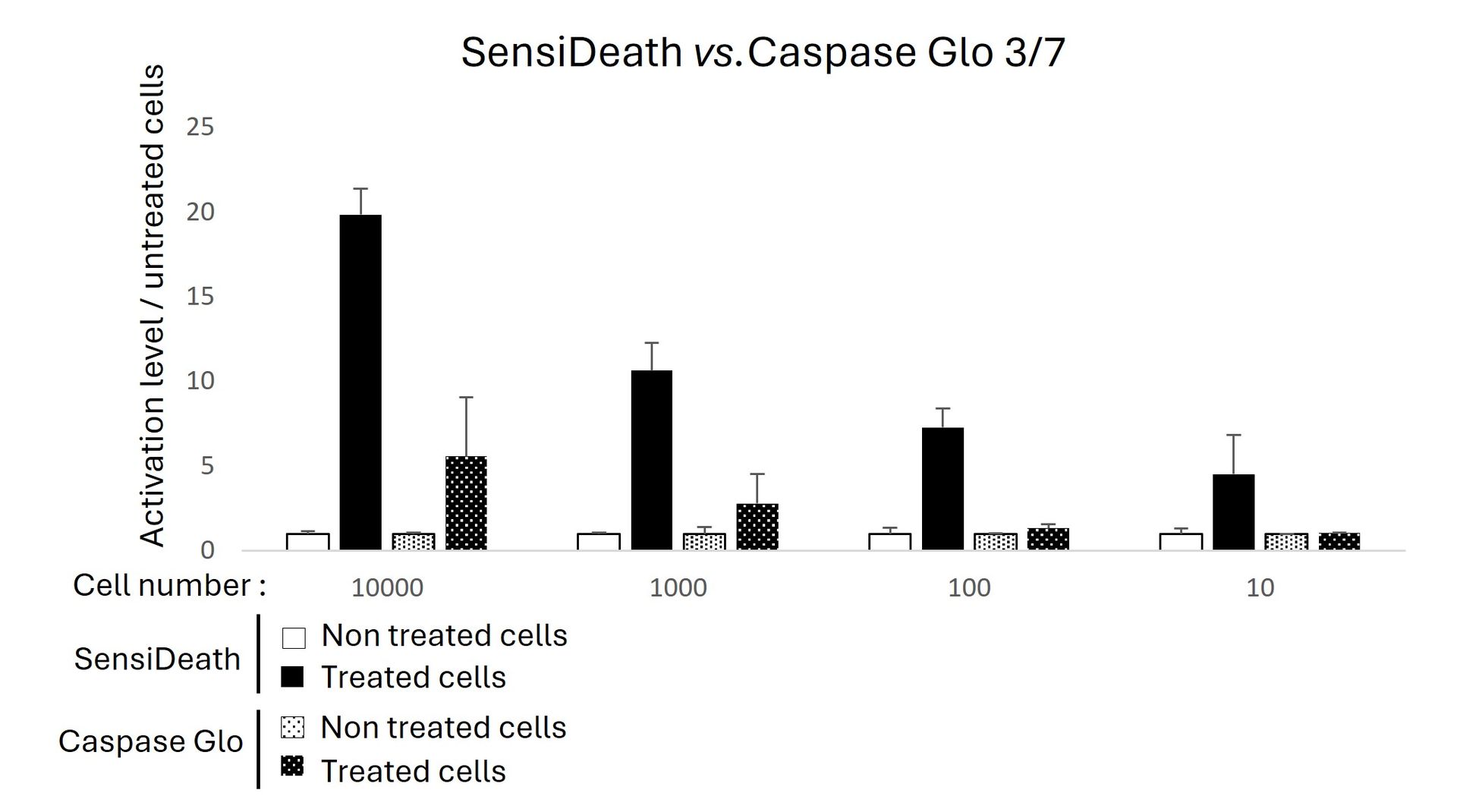
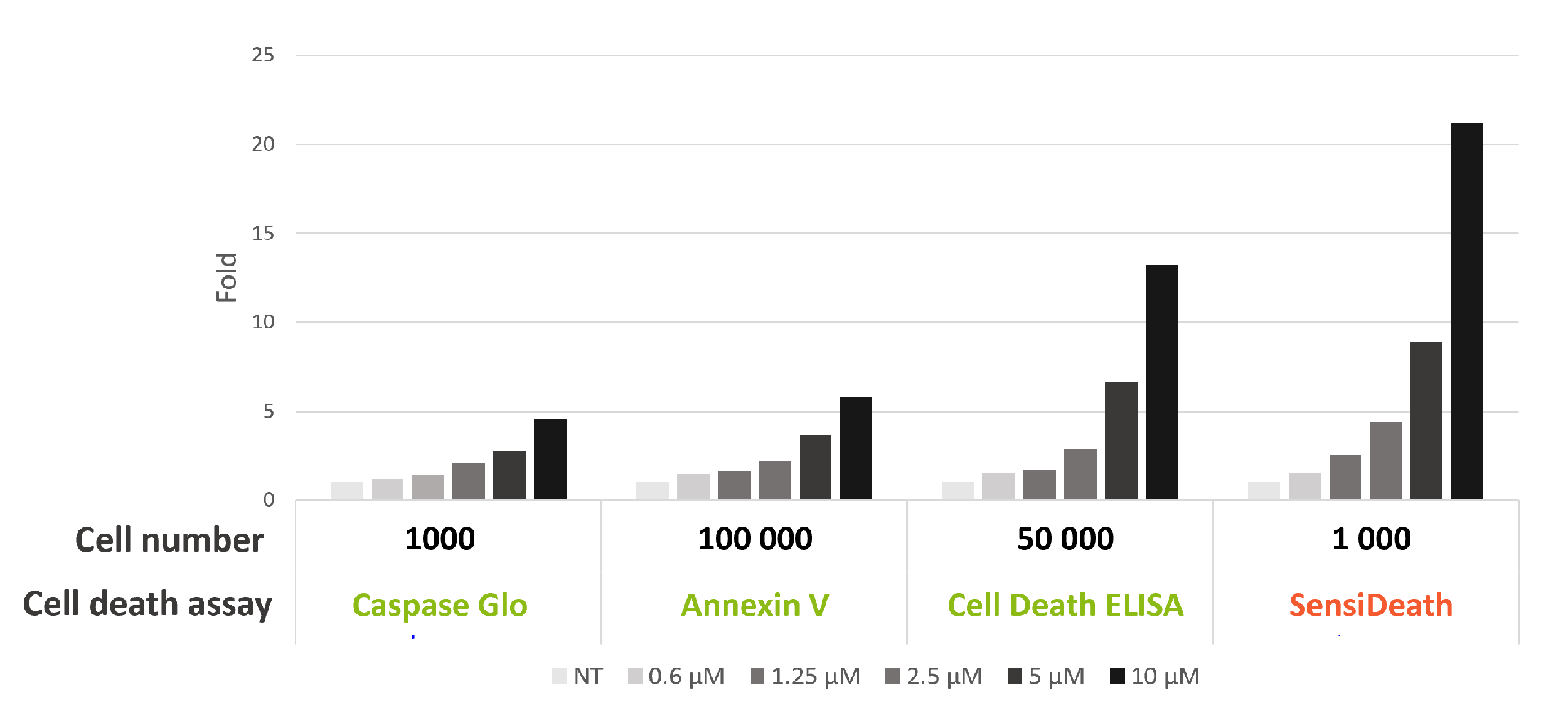
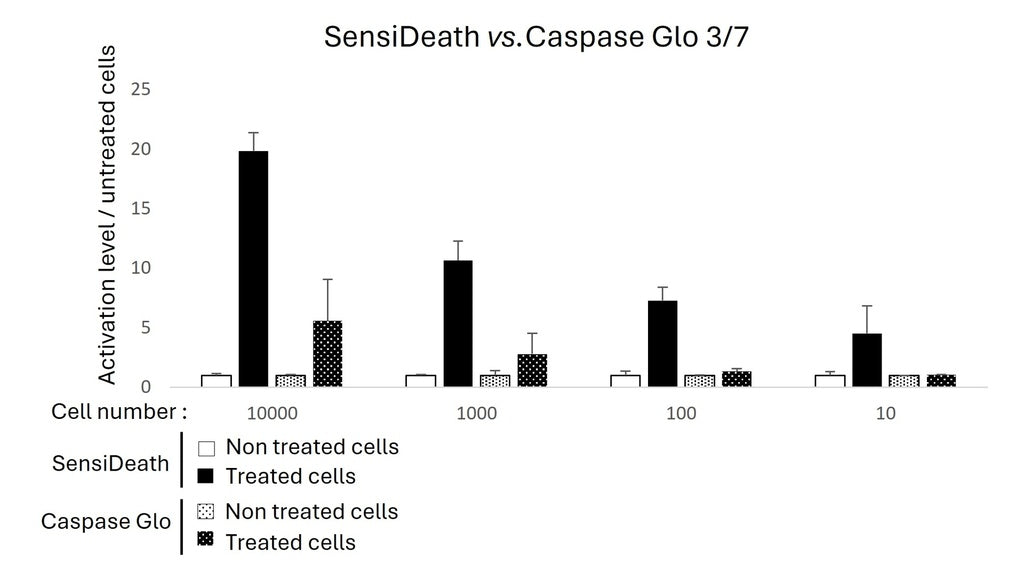
Extended dynamic range of SensiDeath compared to existing methods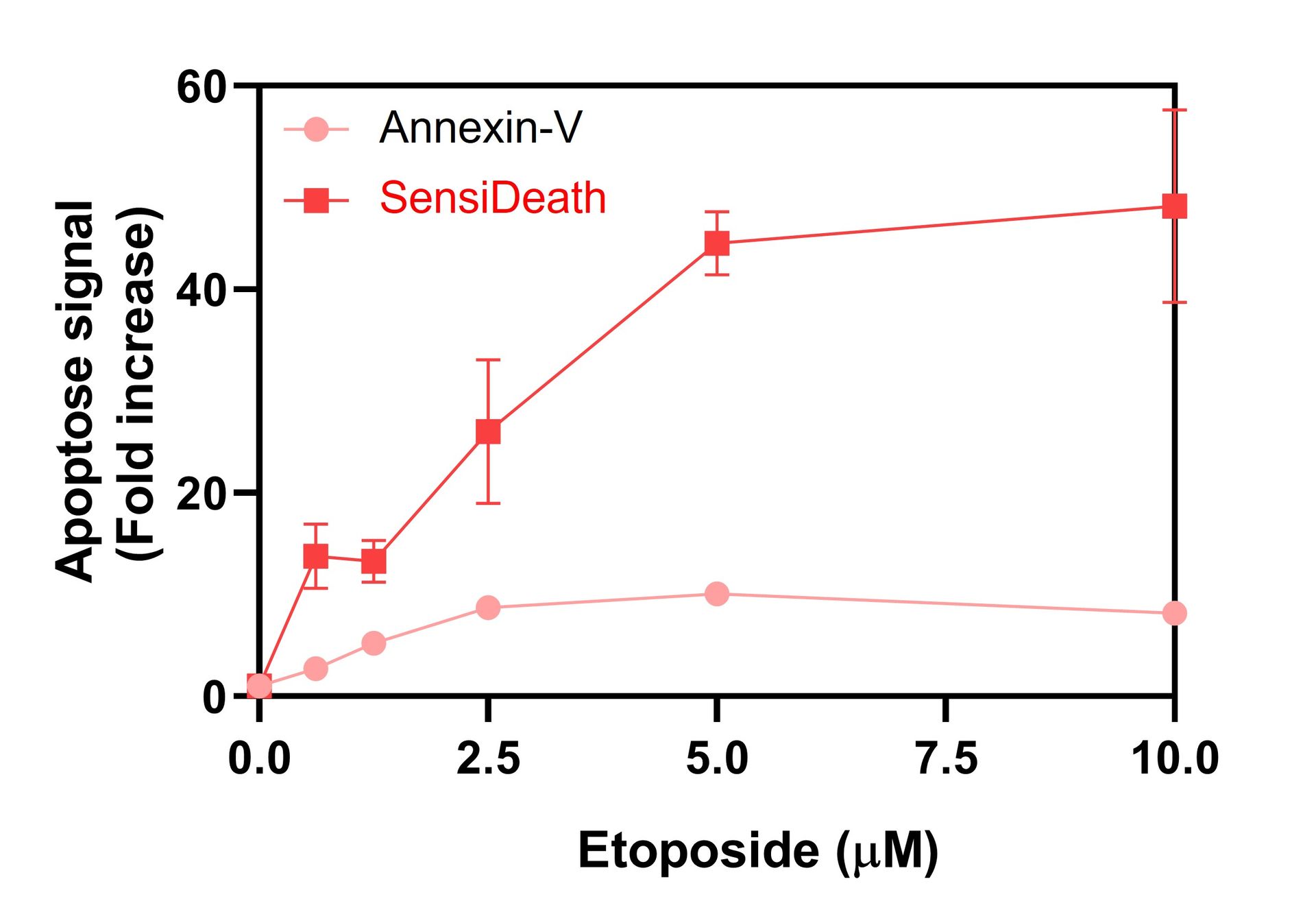
Benchmarking of SensiDeath against other common methods