Idylle
Pinocchio Flasks - Culture Flask for Direct Monitoring of Cell Growth - IDY-PF
Pinocchio Flasks - Culture Flask for Direct Monitoring of Cell Growth - IDY-PF
Couldn't load pickup availability
Integrated glassware for in situ optical density readings under controlled culture conditions
Size:
- 5 Units of 50mL (IDY-PF-50-5)
- 5 Units of 100mL (IDY-PF-100-5)
Catalogue Numbers:
- IDY-PF-50-5 (5 Units of 50mL)
- IDY-PF-100-5 (5 Units of 100mL)
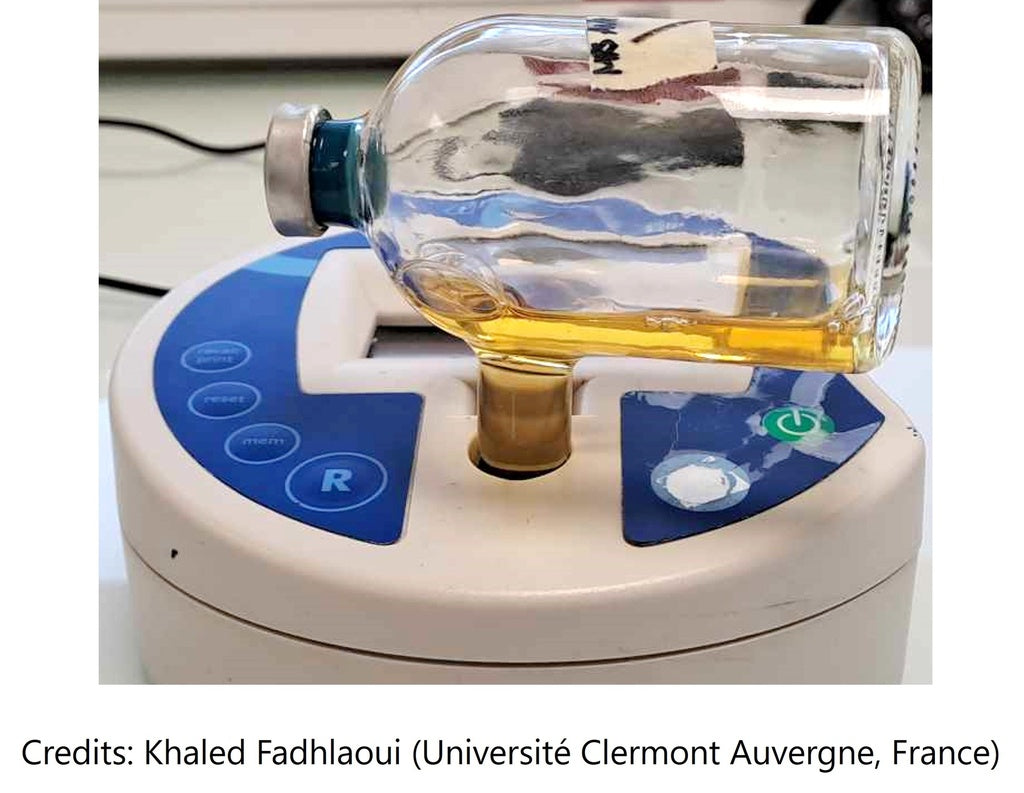
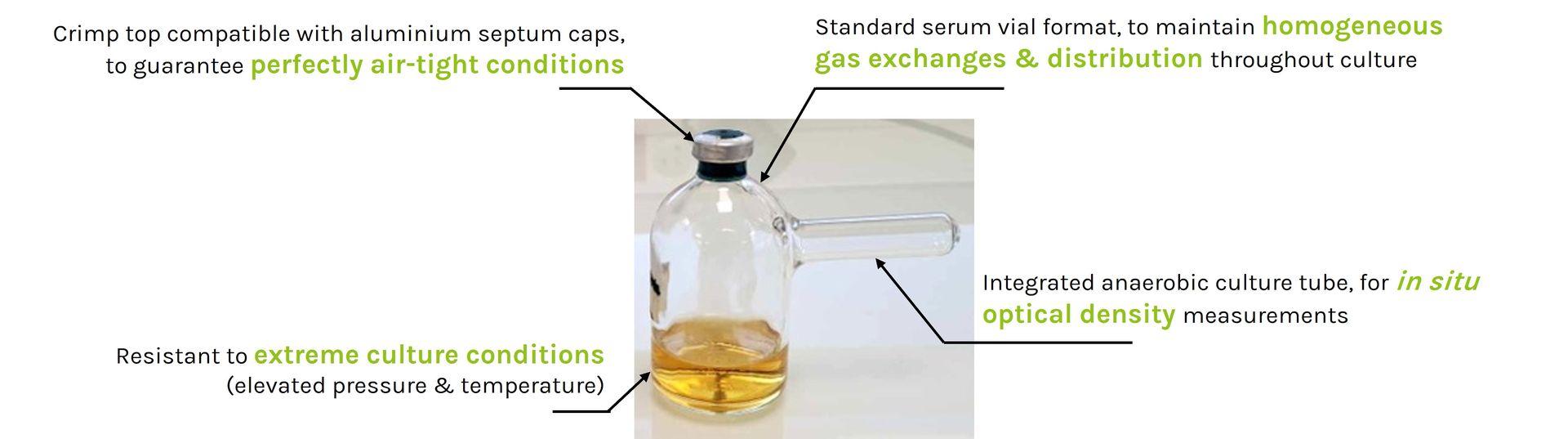
Pinocchio Flask is a smart glassware designed for direct monitoring of microorganism growth during culture. Thanks to their integrated anaerobic culture tube, optical density measurements can be taken in situ while maintaining perfectly stable conditions.
Save time
Say goodbye to fastidious handling under a glove box. Get OD readings instantly!
Get more
No need to be constrained by the tiny volumes of anaerobic culture tubes
Keep control
No lid opening: no risk of accidental contamination or oxygen exposure
Resistant
to elevated pressure (10 bar) and temperatures, they are suitable for routine culture of extremophiles and gas-producing bacteria
By combining the power of serum vials with anaerobic tubes, Pinocchio Flask will be your greatest ally!
The Pinocchio-Flasks design was perfected to simplify experimental workflows when working with:
-
Strict anaerobes or oxygen-sensitive processes: allowing for OD measurements without any risk of oxygen contamination by opening the container, the Pinocchio-Flasks will drastically simplify experimental workflows where maintaining strict anaerobicity is crucial.
- Extremophiles in controlled gaseous environments: a serum vial shape, selected to maintain
a homogeneous gas balance throughout the whole culture and monitor growth without disturbing it.
Resistant to elevated pressures (10 bar), they can be used with gas-producing microorganisms and have notably
been used to support the growth and analysis of methanogenic archaebacteria in a published study [1].
You can also easily sample gas using a gas-tight syringe through the septum without compromising sterility
or internal atmosphere. - High-risk pathogens, requiring containment to prevent accidental release.
- Any other species, to avoid disturbing the culture and reduce the risk of experimental variations due to opening/closing. Or simply to save time!
[1] Borrel G, Fadhlaoui K, Ben Hania W, Gaci N, Pehau-Arnaudet G, Chaudhary PP, Vandekerckove P, Ballet N, Alric M, O'Toole PW, Fardeau ML, Ollivier B, Brugère JF. Methanomethylophilus alvi gen. nov., sp. nov., a Novel Hydrogenotrophic Methyl-Reducing Methanogenic Archaea of the Order Methanomassiliicoccales Isolated from the Human Gut and Proposal of the Novel Family Methanomethylophilaceae fam. nov. Microorganisms. 2023 Nov 17;11(11):2794. doi: 10.3390/microorganisms11112794. PMID: 38004804; PMCID: PMC10673518.
Additional documents: